How Many Boxes to Move House? A Complete Guide by Home Size
Moving home is exciting, but packing everything you own can quickly become stressful if you underestimate the number of boxes you need. Many people only realise they are short of boxes when moving day is just around the corner. That often leads to rushed packing, damaged belongings, and extra costs. If you’re wondering how many boxes to move house, planning ahead can make your move far easier and more organised.
The number of boxes you need depends on more than just the size of your home. Your lifestyle, the number of people living in the property, and how long you’ve lived there all affect the total. This guide explains how to estimate the right number of moving boxes, avoid common packing mistakes, and prepare for a smoother move.
Why Estimating Moving Boxes Matters
Running out of boxes during packing can slow down your entire move. Buying extra boxes at the last minute often costs more, and using unsuitable containers increases the risk of damage.
Research from the UK’s Office for National Statistics (ONS) shows that millions of people change addresses every year, making moving one of the most common major life events. At the same time, research published by Compare My Move found that poor planning remains one of the biggest causes of moving-day stress.
Knowing roughly how many boxes you’ll need helps you:
- Buy packing supplies only once.
- Pack room by room without interruptions.
- Protect fragile belongings properly.
- Save money by avoiding unnecessary purchases.
- Make loading and unloading much faster.
Instead of guessing, use your home’s size as a starting point and then adjust for the number of belongings you own.
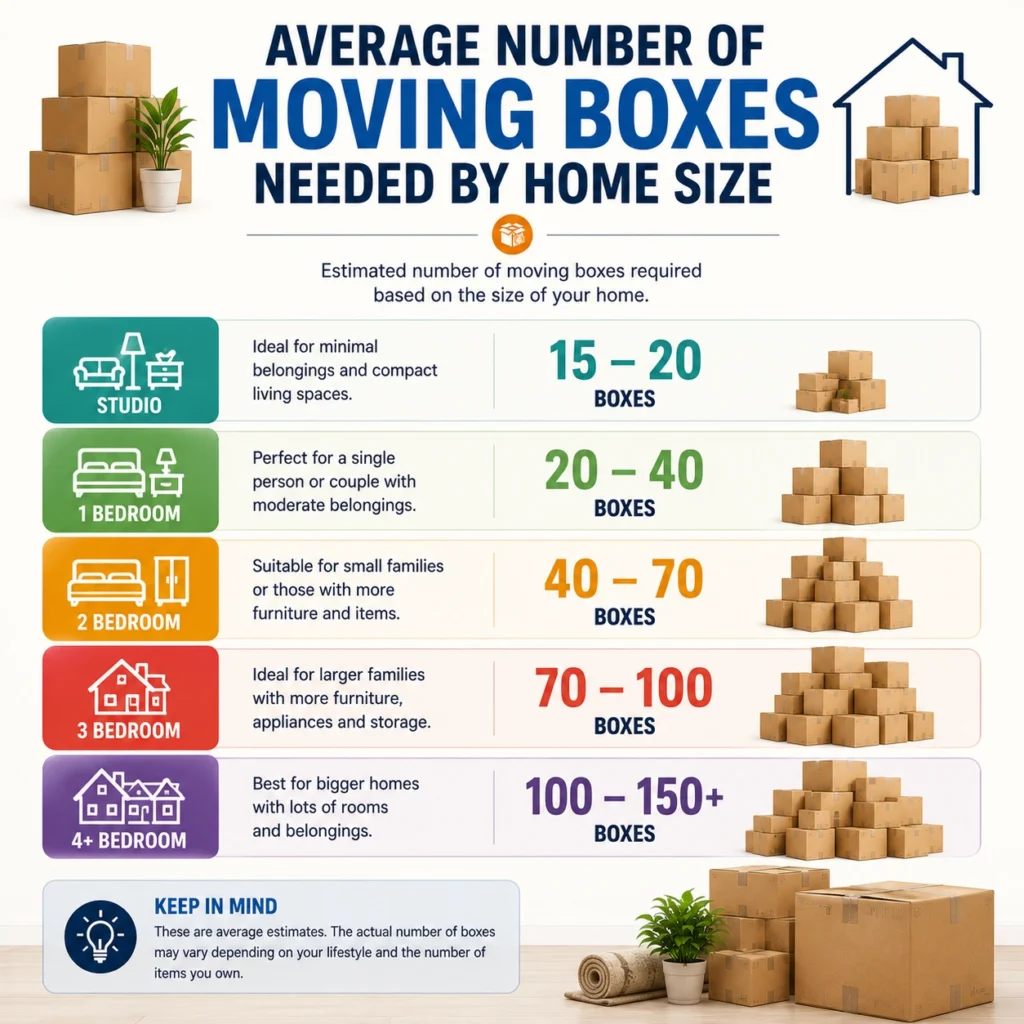
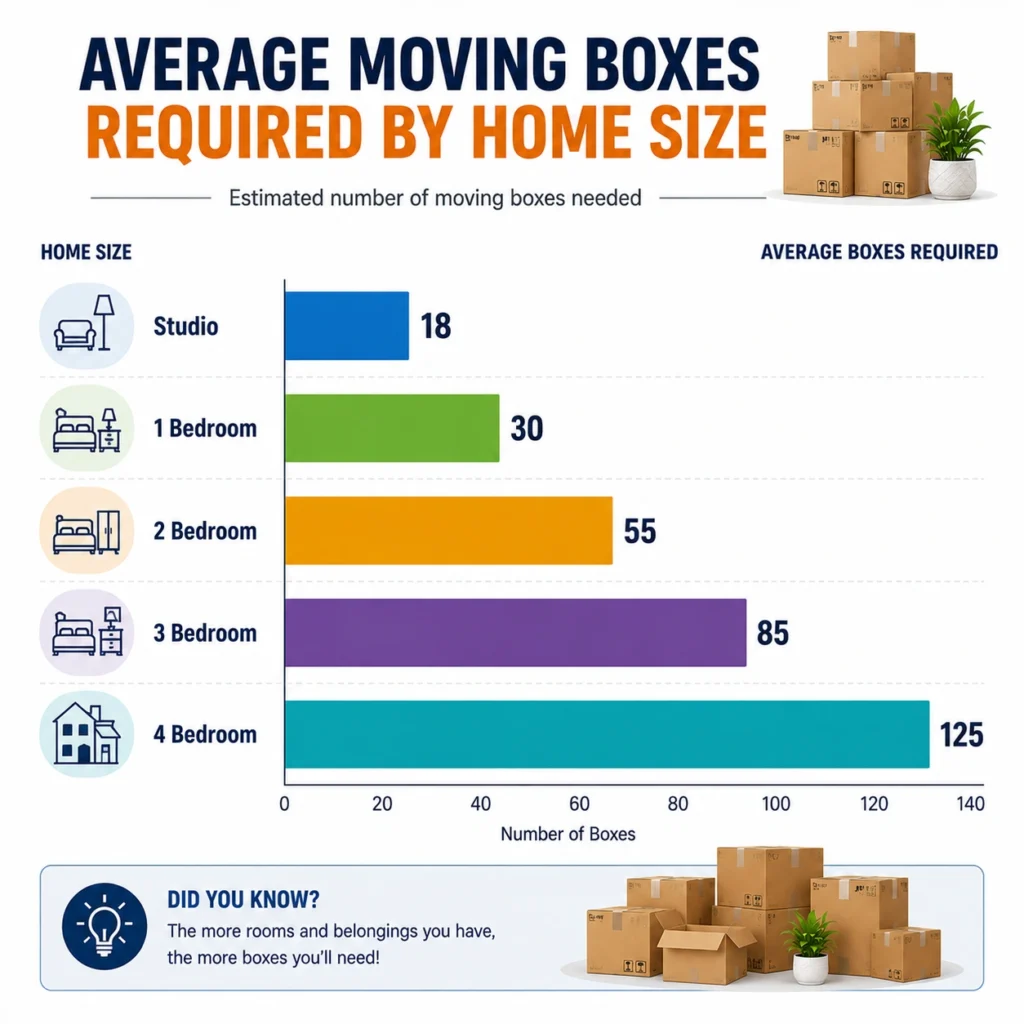
Comparison Table: Estimated Moving Boxes by Home Size
| Home Size | Estimated Boxes | Ideal Move Type | Estimated Packing Time |
|---|---|---|---|
| Studio Flat | 15–20 boxes | Small Van | 1–2 Days |
| 1 Bedroom Home | 20–40 boxes | Small Removal Van | 2–3 Days |
| 2 Bedroom Home | 40–70 boxes | Medium Removal Van | 3–5 Days |
| 3 Bedroom Home | 70–100 boxes | Large Removal Van | 5–7 Days |
| 4 Bedroom Home | 100–150 boxes | Large Removal Van or Luton Van | 1 Week |
| 5+ Bedroom Home | 150–200+ boxes | Multiple Large Removal Vans | 1–2 Weeks |
These estimates assume an average family with standard furniture and household items. Homes with extensive collections, books, or hobbies may require significantly more boxes.
How Many Boxes Does Each Room Usually Need?
Instead of looking only at the size of your property, break your home into individual rooms. This approach gives a much more accurate estimate.
Living Room
Living rooms usually contain decorative items, electronics, books, games, lamps, cushions, and ornaments.
A typical living room generally requires:
Item | Estimated Boxes |
Decorations | 2–4 |
Electronics | 2–3 |
Books | 3–6 |
Miscellaneous Items | 3–5 |
Estimated Total: 10–18 boxes
Large television sets and furniture should be transported separately rather than packed into boxes.
Kitchen
The kitchen often surprises homeowners because it usually contains the highest number of fragile items.
Expect to pack:
- Plates
- Glasses
- Mugs
- Small appliances
- Pantry food
- Pots and pans
- Baking equipment
Most kitchens require 15–25 boxes, depending on how often you cook.
According to Which?, kitchens are among the most time-consuming rooms to pack because fragile items need extra wrapping to prevent breakages during transport.
Bedrooms
Bedrooms are generally easier because clothing can often remain inside wardrobes or drawers for transport, depending on the moving company.
A standard bedroom usually needs:
- Clothing boxes
- Shoe boxes
- Bedding
- Personal belongings
- Accessories
Estimated Total: 10–15 boxes per bedroom
Children’s bedrooms usually require more boxes because of toys, books, games, and school supplies.
Bathroom
Bathrooms contain many small items but very few large ones.
You’ll normally pack:
- Toiletries
- Cleaning products
- Towels
- Medicines
- Cosmetics
Estimated Total: 3–6 boxes
Always separate liquids into sealed bags to reduce the chance of leaks damaging other belongings.
Garage, Loft and Shed
These storage areas are often overlooked during planning.
Many garages contain:
- Tools
- Sports equipment
- Gardening supplies
- Seasonal decorations
- Paint tins
- Storage containers
These spaces commonly require another 10–30 boxes, depending on how long you’ve lived in the property.
Moving Box & Supply Calculator
Estimate the exact number of boxes, protective wrap, and van size needed for your move.
📦 Recommended Moving Boxes
Pro Packing Advice
Factors That Can Increase the Number of Boxes You Need
Not every two-bedroom house needs the same number of boxes. Several lifestyle factors make a noticeable difference.
How Long You've Lived There
People naturally collect more belongings over time.
Research by Statista has shown continued growth in household spending on furniture, furnishings, and household equipment across the UK over recent years. That means households often accumulate more possessions than they realise.
Someone living in the same property for ten years may need nearly twice as many boxes as someone who moved in only two years ago.
Your Lifestyle
Collectors, hobbyists, book lovers, musicians, and families with young children generally require considerably more packing materials than minimalists.
Large collections of books deserve special attention because books become surprisingly heavy. Professional movers usually recommend packing books into smaller boxes to reduce lifting strain and prevent boxes from breaking.
Choose the Right Types of Moving Boxes
The number of boxes matters, but choosing the right size is just as important. Using the wrong boxes can make lifting difficult and increase the risk of damage.
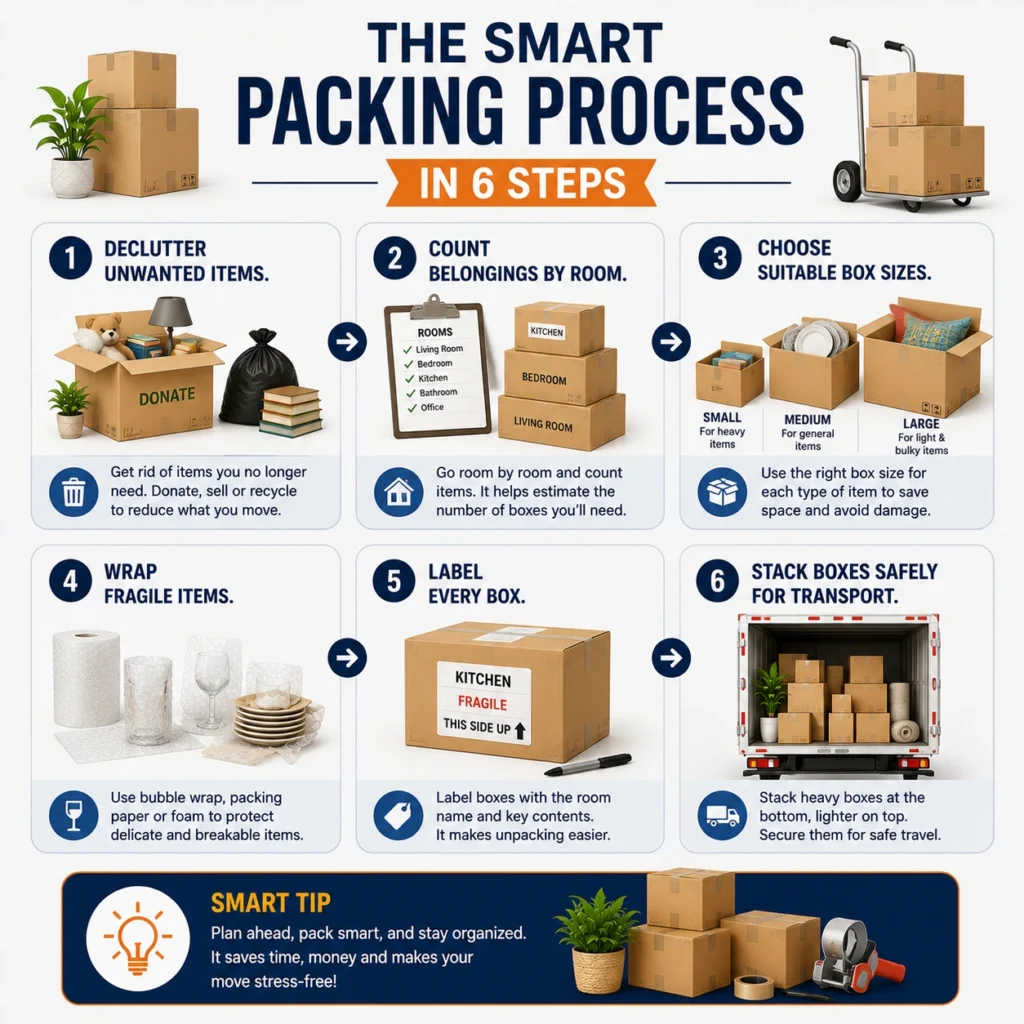
Small boxes are best for heavy items like books, tools, canned food, and paperwork. Medium boxes work well for kitchenware, toys, and folded clothes. Large boxes are ideal for lightweight items such as bedding, pillows, and lampshades. Wardrobe boxes are useful for hanging clothes, while double-walled boxes provide extra protection for fragile or valuable belongings.
Professional movers often recommend mixing box sizes instead of buying only large boxes. This makes stacking safer inside the removal van and reduces the chance of boxes collapsing during transport.
Pack Smarter, Not Harder
Packing efficiently can reduce the number of boxes you need while protecting your belongings.
Start by decluttering every room before you begin packing. Donate, recycle, or sell items you no longer use. Research from the charity WRAP (Waste & Resources Action Programme) shows that reusing and reducing household items before moving helps cut unnecessary waste while making moves more efficient.
Pack one room at a time and clearly label every box with its destination room and a brief description of the contents. This simple habit saves hours when unpacking.
Heavy items should always go into small boxes. Lightweight but bulky items should be packed in larger boxes. Fill empty spaces with packing paper, towels, or soft clothing to stop items moving during transport.
Common Mistakes People Make When Estimating Moving Boxes
Many homeowners underestimate how much they own until packing begins.
Some of the most common mistakes include:
- Forgetting about lofts, garages, sheds, and cupboards.
- Using supermarket boxes that cannot support heavy loads.
- Packing books into oversized boxes.
- Leaving packing until the final few days.
- Not buying enough packing materials for fragile items.
Avoiding these mistakes makes moving day much smoother and reduces the chance of damaged belongings.
When Should You Start Packing?
Packing earlier than you think is almost always the better option.
A general guide looks like this:
Following a simple schedule helps spread the workload and prevents last-minute stress.
Planning a Move in West Drayton?
If you’re arranging house removals in West Drayton, estimating your box requirements before requesting quotes can make the entire moving process more efficient. Having a realistic idea of how many boxes to move house also helps removal companies recommend the right vehicle size, number of movers, and estimated loading time, making your move smoother from start to finish.
Room-by-Room Moving Box Estimator
Estimate required boxes, packing labor hours, and vehicle sizing based on your home's layout.
Estimated Total Boxes Needed
Includes clutter factor, fragile kitchenware, and storage areas.
Room-by-Room Packing Tip
Frequently Asked Questions (FAQs)
1. How many boxes do I need to move house?
The number of boxes you need depends on the size of your home and how many belongings you own. As a general guide, a one-bedroom home usually needs 20–40 boxes, a two-bedroom home requires 40–70 boxes, and a three-bedroom home typically needs 70–100 boxes. Larger homes with garages or lofts may require over 150 boxes.
2. How do I calculate how many moving boxes I need?
Start by counting the number of rooms in your home and estimating the contents of each. Kitchens, garages, and lofts usually need more boxes than bedrooms or bathrooms. Using a moving box calculator or room-by-room checklist can provide a more accurate estimate.
3. What size moving boxes should I use?
Use small boxes for heavy items like books and tools, medium boxes for kitchenware and toys, and large boxes for lightweight items such as bedding and pillows. Wardrobe boxes are ideal for transporting hanging clothes without removing them from hangers.
4. How many boxes are needed for a 2-bedroom house?
Most two-bedroom homes require between 40 and 70 moving boxes. The exact number depends on how long you’ve lived there, the amount of furniture you own, and whether you have additional storage spaces like a garage, shed, or loft.
5. When should I start packing before moving house?
It’s best to begin packing around three to four weeks before your moving date. Start with items you rarely use, such as seasonal clothing, decorations, books, and spare kitchenware. Leave everyday essentials until the final few days.
6. Can professional removal companies provide moving boxes?
Yes. Most professional removal companies supply high-quality moving boxes and packing materials. Many also offer complete packing services, ensuring your belongings are packed safely and efficiently before moving day.
7. Should I buy new moving boxes or use free boxes?
New moving boxes offer better strength, durability, and protection for valuable belongings. While free boxes from supermarkets can help reduce costs, they may not be strong enough for heavy or fragile items and are often inconsistent in size.
8. How can I reduce the number of boxes I need?
Decluttering before you move is one of the easiest ways to reduce the number of boxes required. Donate, recycle, or sell unwanted items, and avoid packing things you no longer use. This can lower moving costs and make unpacking much easier.
9. How much weight should a moving box hold?
Most standard moving boxes should weigh no more than 20 kg (44 lbs). Heavy items such as books should always be packed in smaller boxes to prevent lifting injuries and reduce the risk of boxes breaking during transport.
10. Why choose professional house removals in West Drayton?
Professional house removals West Drayton services help make moving faster, safer, and less stressful. Experienced movers can recommend the correct number of moving boxes, supply quality packing materials, protect fragile items, and transport your belongings efficiently to your new home.