

Movers and Packers Bexley: 8 Things That Professional Packers Notice That Homeowners Often Miss
Table of Contents
Packing for a house move looks simple until you start preparing dozens of boxes, fragile belongings and bulky furniture. Experienced movers and packers Bexley teams notice problems that homeowners often overlook, from poorly balanced boxes to items packed without considering how they will be unloaded later.
Professional packing is not simply about putting possessions into cartons. It is about protecting items, using space efficiently and making the moving process easier at both addresses. The UK Government recommends being packed and ready before moving day because trying to complete major packing on the morning of the move can create delays.
Why Professional Packers Notice Different Things
Homeowners naturally focus on whether everything fits inside a box. Professional packers think further ahead. They consider how heavy the box will become, whether the contents can shift during transport, how it will be carried and where it needs to go when unloaded.
This experience becomes particularly useful in Bexley, where properties can vary considerably, from flats and compact homes to larger family properties. Access, stairs, parking and the distance between the property and vehicle can all affect how efficiently belongings can be handled.
Sameday Removals’ Bexley moving service covers professional loading, transportation and unloading, with packing available as part of its wider moving services.
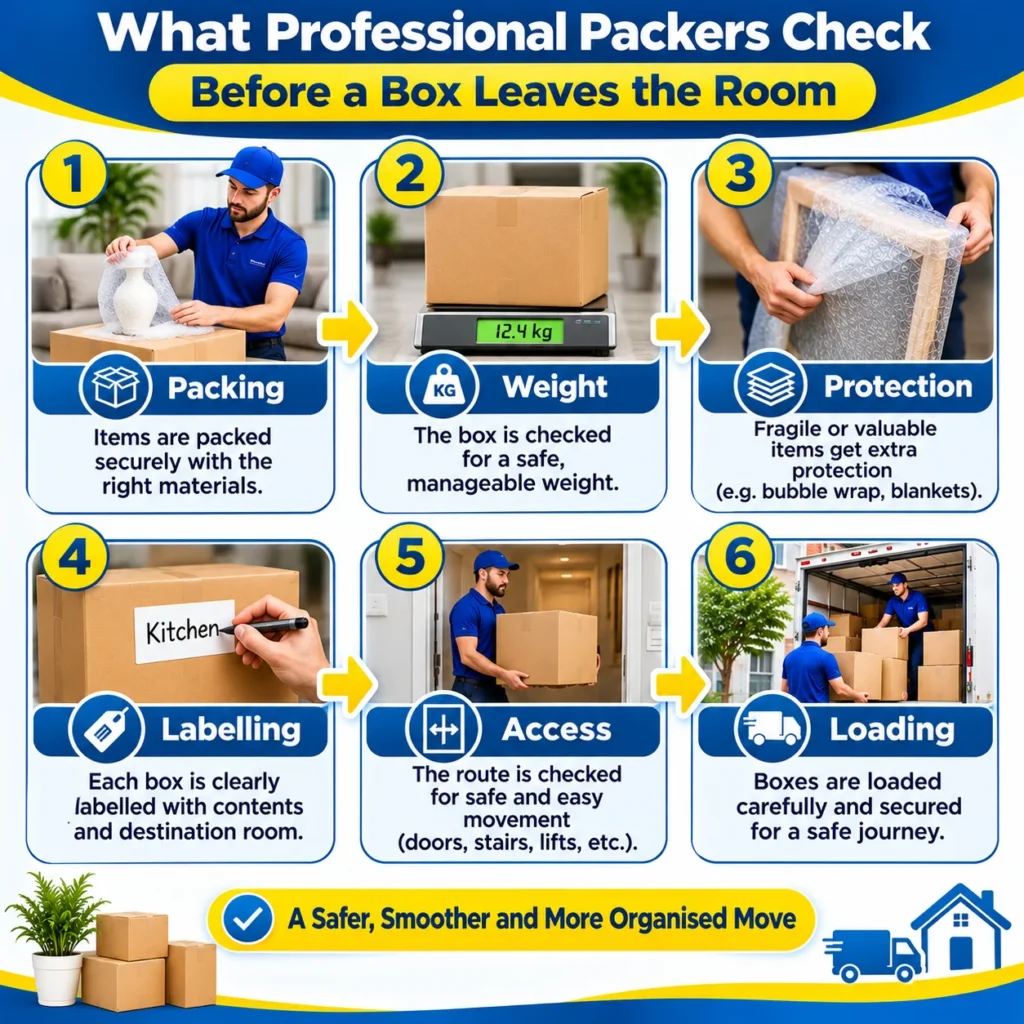
8 Things Professional Packers Notice That Homeowners Often Miss
1. A Box Can Be Full Without Being Properly Packed
A common mistake is filling every available space. A box may look efficient but still contain gaps that allow objects to move around during transportation.
Professional packers use suitable protective material to reduce movement and pay attention to how different items sit together. Heavy objects also need to be positioned carefully rather than placed on top of delicate belongings.
2. Weight Distribution Affects More Than Convenience
An overloaded box can become difficult or unsafe to carry. It can also place unnecessary pressure on the carton itself.
Professionals therefore think about weight distribution rather than simply the number of items inside. Books, paperwork and dense household objects may need smaller boxes, while lighter items can be placed in larger cartons.
3. Fragile Items Need More Than a Label
Writing “FRAGILE” on a box does not protect what is inside. Glassware, mirrors, ornaments and other delicate possessions need appropriate cushioning and separation.
Professional packers also consider whether fragile objects can make contact with one another. A box containing several delicate items needs internal protection, not just an external warning

4. Labels Should Help the Unloading Team
A label saying “Kitchen” is useful, but experienced movers often need more information. A better system identifies the room and gives a quick indication of important contents or handling requirements.
Clear labelling can make unloading more organised because boxes can be directed towards the correct rooms instead of being placed randomly throughout the property.
5. Some Items Should Not Be Packed Like Everything Else
Homeowners sometimes treat every possession as an ordinary household item. Professionals recognise that electronics, artwork, antiques, appliances and unusually valuable belongings may require different protection or handling.
Before booking, ask the removal company which items need special arrangements and what insurance applies. The UK Government advises customers to check whether their belongings are covered throughout the move and to examine the small print for additional charges.
6. The Route Out of the Property Matters
A perfectly packed box is not much use if it cannot be carried safely through the property.
Professional packers consider staircases, narrow hallways, doorways, lifts and external access. They may also identify furniture that needs dismantling before it can leave the room.
This is one reason a detailed quotation can be more useful than a simple price based only on the number of rooms.
7. Homeowners Often Pack Things They Need Immediately
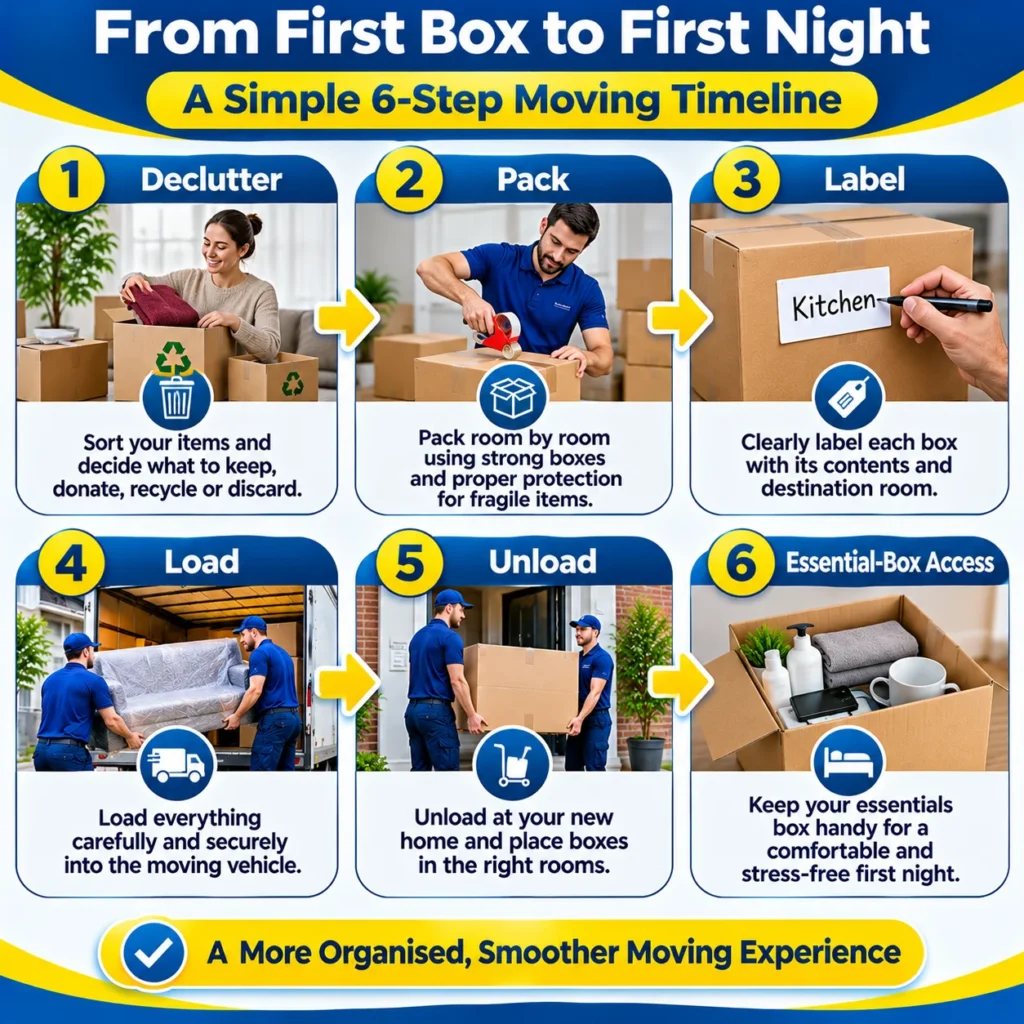
One of the easiest mistakes to make is packing everything without separating essential items. The UK Government specifically recommends preparing a box containing first-night essentials such as toiletries, bedding, chargers, basic kitchen items and other necessities.
Professional movers understand that the last box loaded is not necessarily the first box you will need. Keeping essentials clearly separated can make the first evening considerably easier.
8. The Best Packing Strategy Starts Before the Boxes Arrive
Professional packing begins with decisions, not cardboard. Unwanted possessions should be removed before packing because there is little value in paying to transport items you no longer need.
Bexley Council also encourages residents to reduce and reuse packaging where practical, including using old paper and shredded paper for protection and recycling suitable packaging materials.

Why Box Weight Matters More Than You Think
Box weight affects carrying, stacking and unloading. If several heavy boxes are packed together, movers may need to handle them differently from lighter cartons.
A useful approach is to distribute dense belongings across several appropriately sized boxes rather than creating a few extremely heavy ones. This also makes unpacking more manageable once you reach the new property.
The Packing Mistakes That Cause Delays
Leaving packing until the final morning is one of the biggest avoidable problems. The UK Government advises homeowners to start packing and clearing unwanted belongings before moving day, while also recommending that the home is ready before the morning of completion.
Another mistake is failing to tell the removal company about difficult access, unusually large furniture or fragile possessions. These details can affect equipment, manpower, vehicle choice and the time required.
If you are comparing packing and removal services London providers, look beyond the headline price. Check exactly what packing includes, what materials are supplied, how fragile items are handled and what insurance applies.
What to Check Before Moving Day
The final inspection should confirm that every box is sealed, labelled and allocated to a room. Essential documents, valuables and items you need immediately should remain accessible rather than disappearing into the main load.
It is also worth confirming collection and delivery access with the removal company. The British Association of Removers highlights the importance of being physically ready to vacate the property on completion day, while the UK Government recommends discussing access and unusual items with removal firms before receiving a quotation.
Choosing Professional Packing Support
Professional packing can be particularly useful when you have limited preparation time, a large household or many fragile possessions. Sameday Removals Ltd states that its packing service can cover full packing, fragile items or selected rooms, giving customers flexibility over how much assistance they require.
The right choice depends on your belongings, available time and budget. Before booking, ask for a clear written quotation, confirm insurance arrangements and make sure any additional services or charges are explained.
Key Takeaways
Professional packing is about much more than filling boxes. Weight distribution, fragile-item protection, clear labelling, access planning and keeping essential belongings separate can all influence how smoothly a move progresses.
The biggest advantage of professional experience is often noticing small problems before they become moving-day problems. A little planning before the first box is sealed can save considerable time and stress later.
If you are preparing for a move in Bexley, Sameday Removals Ltd provides packing and moving support designed around the requirements of the individual relocation.
What part of your Bexley move are you most concerned about—fragile packing, heavy furniture, difficult access or simply getting everything ready on time?
Looking for removal service in London?
0795-145-5002
Frequently Asked Questions
1. Is professional packing worth it when moving house?
Professional packing can save significant preparation time and may be useful when you have fragile, valuable or numerous belongings. The value depends on how much time you have, the complexity of the move and how much packing you want to handle yourself.
2. How early should I start packing for a house move?
There is no single timetable that suits every household, but packing should begin well before moving day. The UK Government advises homeowners to start packing and clearing unwanted belongings rather than attempting to complete everything on the morning of the move.
3. What should I pack first when moving house?
Items that are rarely used can usually be packed first, while everyday essentials should remain available until shortly before moving day. Seasonal belongings, decorations and rarely used storage items are often practical starting points.
4. Should I label every moving box?
Yes, clear labelling can make unloading and unpacking much easier. Room names combined with brief handling or contents information can help movers place boxes more efficiently.
5. How should fragile items be packed?
Fragile items should be individually protected and separated so they cannot knock against one another during transport. Suitable cushioning should be used around vulnerable objects, with heavier contents positioned carefully.
6. Can professional movers pack only certain rooms?
Yes, some removal companies offer partial or room-specific packing rather than requiring customers to purchase a full packing service. This can be useful when you want professional help with kitchens, fragile belongings or particularly difficult rooms.
7. Are my belongings insured when professional movers pack them?
Insurance arrangements vary between removal companies and service types. The UK Government recommends checking whether belongings are covered throughout the move and understanding the terms before booking.
8. What should I keep separate on moving day?
Keep essential documents, medication, chargers, toiletries, basic clothing and important personal items accessible. A dedicated first-night box can prevent you from searching through numerous cartons after arriving.
9. Does professional packing make a move more expensive?
Packing is an additional service with a cost, but the actual price depends on the volume of belongings, number of rooms, materials, fragile items and level of assistance required. Comparing detailed quotations can help you understand what you are paying for.
10. What should I ask a removals company before booking?
Ask about insurance, packing materials, access requirements, additional charges, handling of fragile belongings and what is included in the quotation. The UK Government also recommends obtaining more than one quote and checking trade association membership, insurance and the small print.