How to Move a Wardrobe Safely: Dismantle or Carry Whole?
Moving a wardrobe sounds simple until you try to lift one. Many wardrobes are heavier than they look, have delicate joints, and can become unstable when moved incorrectly. Knowing how to move a wardrobe the right way can save you from damaged furniture, scratched walls, and even serious injuries.
Whether you’re moving across town or relocating your entire home, choosing between dismantling the wardrobe or carrying it whole depends on several important factors. This guide explains both options, when each one works best, and how professional movers in Harmondsworth approach large furniture safely.
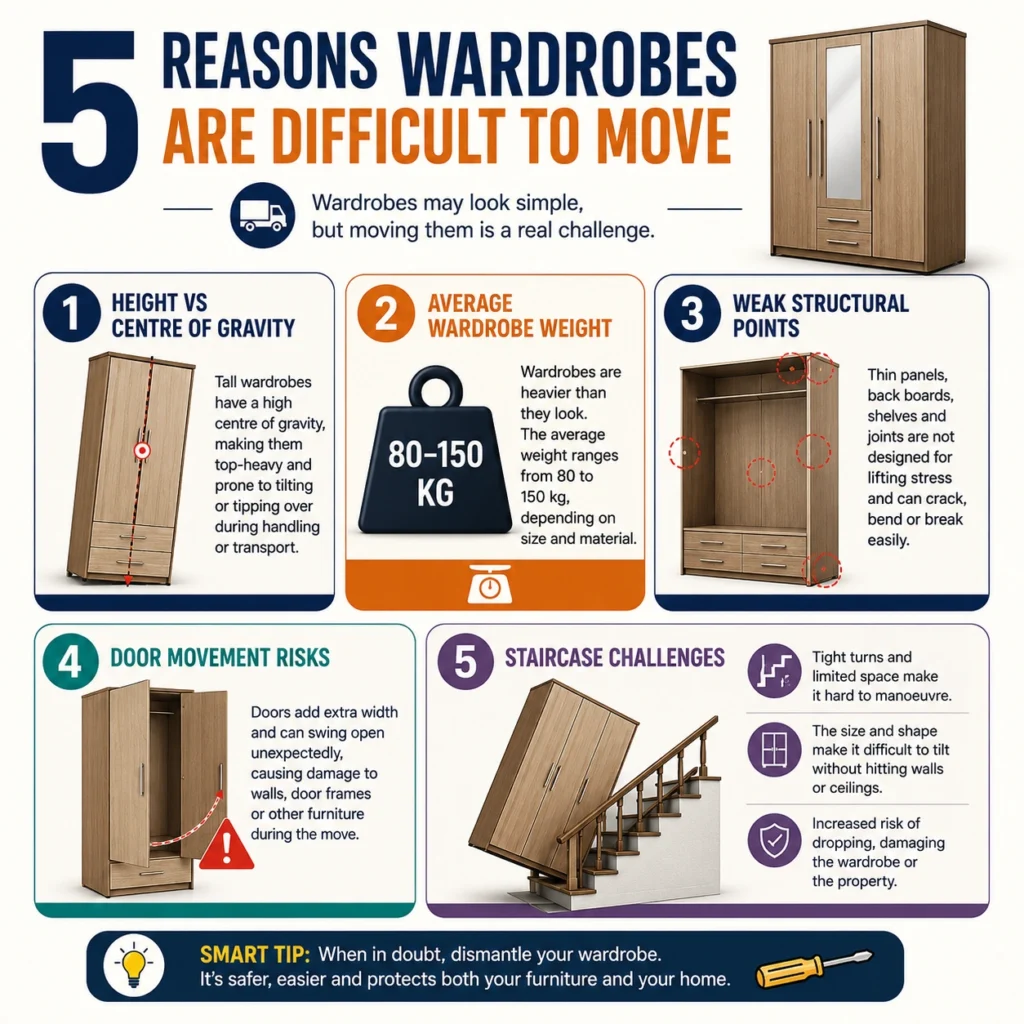
Why Moving a Wardrobe Is More Difficult Than Most Furniture
Unlike tables or chairs, wardrobes are tall, heavy, and often top-heavy. Their weight is rarely distributed evenly, making them difficult to balance through narrow hallways or staircases.
According to the UK’s Health and Safety Executive (HSE), manual handling injuries remain one of the leading causes of workplace musculoskeletal disorders, with lifting heavy and awkward objects being a major contributor. Safe lifting techniques and proper planning significantly reduce injury risks.
Modern wardrobes also use cam locks, dowels, particleboard panels, and veneers that can weaken if repeatedly moved while fully assembled.
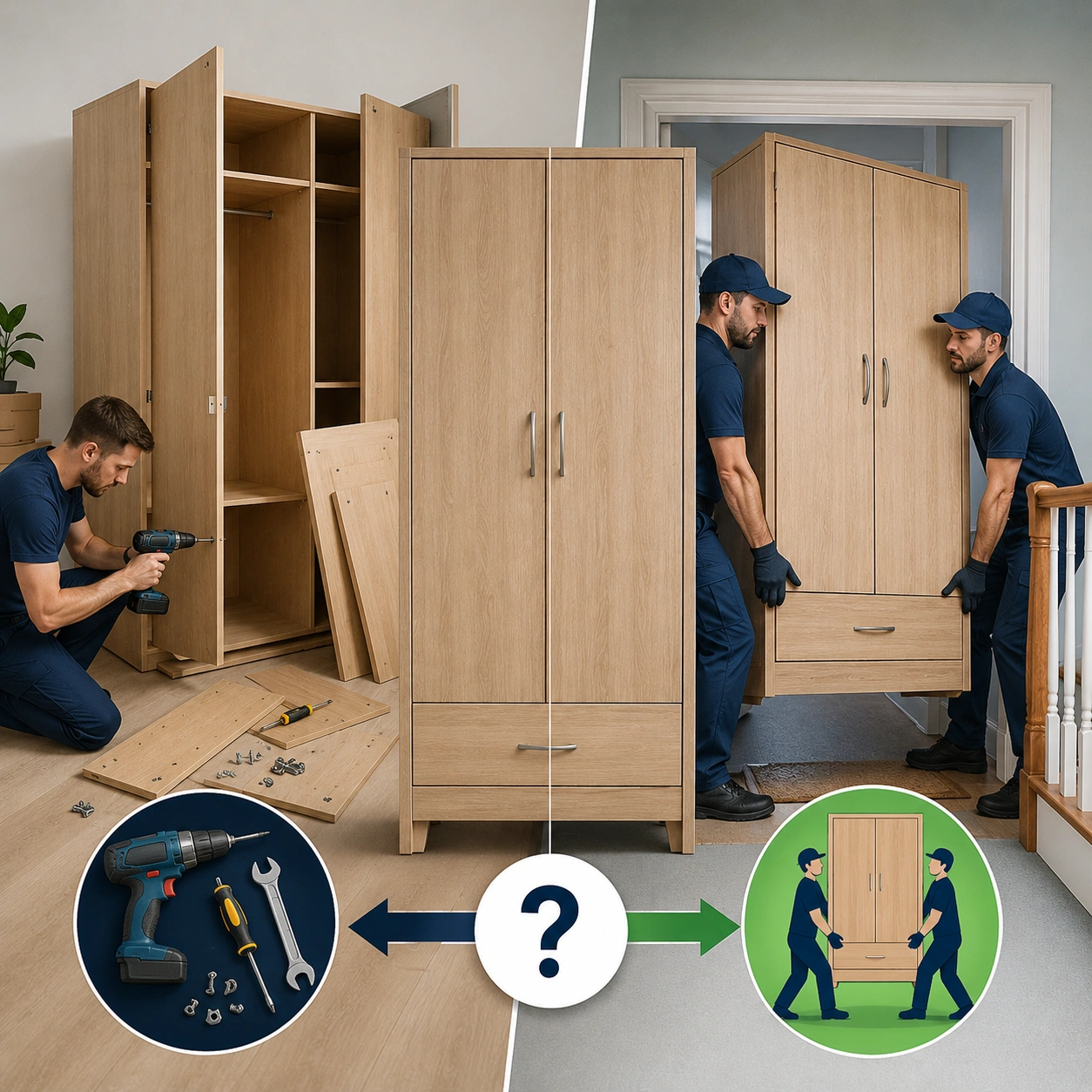
Should You Dismantle or Carry It Whole?
There isn’t one correct answer.
The right method depends on:
| Factor | Carry Whole | Dismantle |
|---|---|---|
| Small wardrobe | ✓ | Optional |
| Large sliding wardrobe | ✗ | ✓ |
| Fits through doors | ✓ | Optional |
| Narrow staircase | ✗ | ✓ |
| Old particleboard furniture | Usually No | Usually Yes |
| Solid wood wardrobe | Depends on weight | Often Recommended |
| Long-distance move | Rarely | ✓ |
For most medium and large wardrobes, dismantling is usually the safer option.
When You Should Carry the Wardrobe Whole
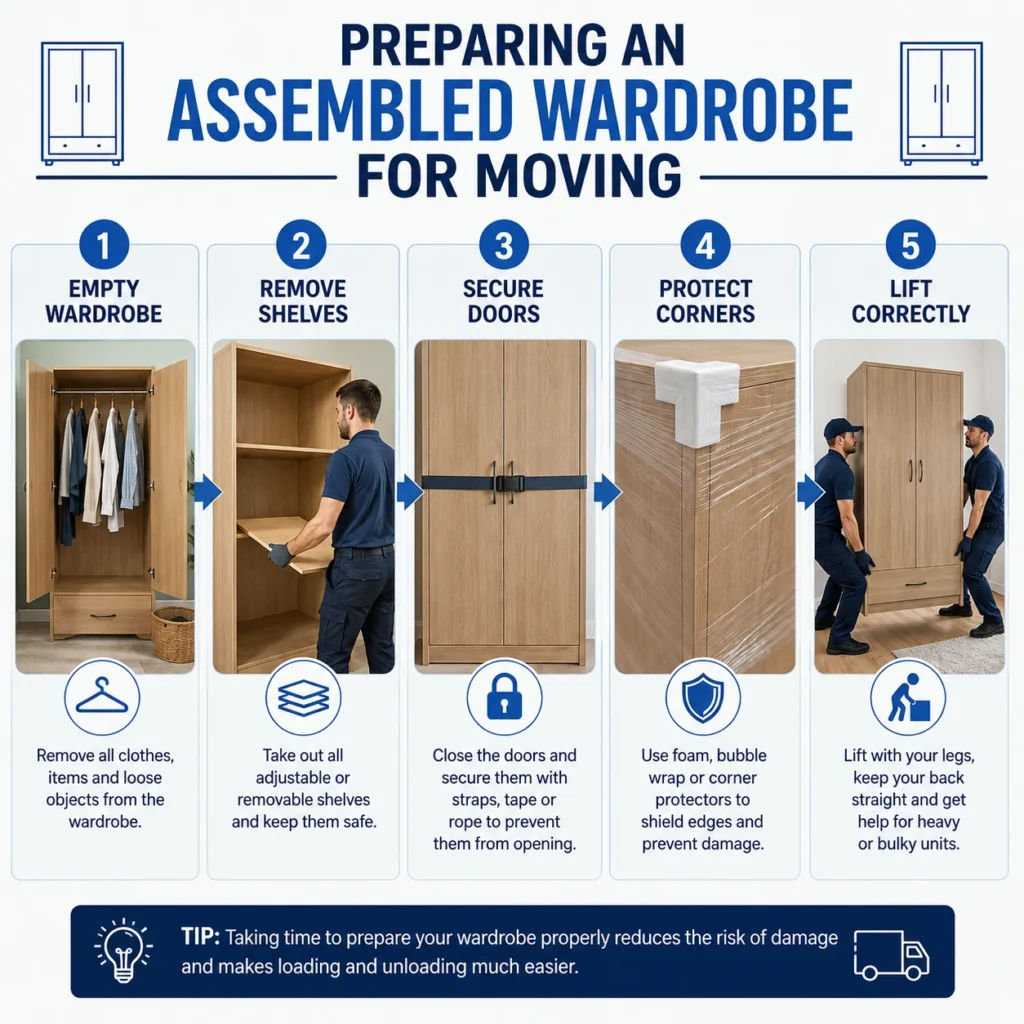
Keeping a wardrobe assembled can work under the right conditions.
Choose this option if:
- The wardrobe easily fits through every doorway.
- No stairs are involved.
- The furniture is relatively lightweight.
- The structure is very strong.
- The moving distance is short.
Before lifting, remove:
- Shelves
- Clothes
- Drawers
- Mirrors
- Hanging rails
Reducing weight improves balance and lowers the chance of damage.
Always secure wardrobe doors using moving straps or stretch wrap so they cannot swing open during transport.
When Dismantling Is the Better Option
Large wardrobes are designed to be assembled once and remain in place.
If your wardrobe has:
- Sliding doors
- Overhead storage
- Mirror panels
- Multiple sections
- Large width
then dismantling is almost always safer.
Removing large panels reduces weight and allows movers to carry pieces safely through tight spaces.
Professional movers also label every panel and hardware bag to make reassembly much quicker.
How to Dismantle a Wardrobe Safely
Before picking up any tools, take photos of every section.
These pictures become valuable during reassembly.
Then follow these steps:
Step 1: Empty Everything
Remove:
- Clothes
- Drawers
- Shelves
- Hanging rails
This reduces unnecessary weight.
Step 2: Label Every Part
Use masking tape to label:
- Left panel
- Right panel
- Top
- Bottom
- Back panel
Store all screws in labelled bags.
Step 3: Remove Doors Carefully
Doors usually carry significant weight.
Sliding doors should be removed first according to the manufacturer’s instructions.
Mirror doors require extra protection.
Step 4: Take Apart the Frame
Work from the top down.
Avoid forcing panels apart.
If resistance occurs, double-check for hidden fixings.
Step 5: Protect Every Panel
Wrap each panel individually using:
- Furniture blankets
- Bubble wrap
- Stretch film
This prevents scratches during transport.
Can Moving a Wardrobe While Assembled Damage It?
Yes.
Many wardrobes today use engineered wood rather than solid hardwood.
Repeated lifting while fully assembled places stress on:
- Cam locks
- Corner joints
- Dowels
- Back panels
Over time, these joints can loosen permanently.
Large wardrobes may also twist slightly during lifting, causing doors to become misaligned.
This is one reason experienced movers in Harmondsworth often recommend dismantling large furniture before transport.
Safety Tips When Lifting Any Wardrobe
Never attempt to lift a wardrobe alone.
According to HSE manual handling guidance, assessing load weight, route, and lifting technique greatly reduces injury risk.
Good lifting practice includes:
- Lift with your legs.
- Keep the wardrobe close to your body.
- Avoid twisting while carrying.
- Wear grip gloves.
- Use lifting straps where appropriate.
- Clear the walking route before lifting.
Small preparation saves a lot of trouble later.
Wardrobe Moving Decision Tool
Assess whether your wardrobe can be moved in one piece or requires dismantling to safely pass through doors and stairways.
Safety & Handling Guidance
Common Mistakes People Make
Many wardrobe accidents happen because people rush.
The most common mistakes include:
- Forgetting to measure doorways.
- Leaving clothes inside.
- Carrying mirror doors uncovered.
- Losing screws.
- Using the wrong screwdriver.
- Dragging furniture across flooring.
- Tilting wardrobes excessively.
Planning ahead usually prevents these problems.
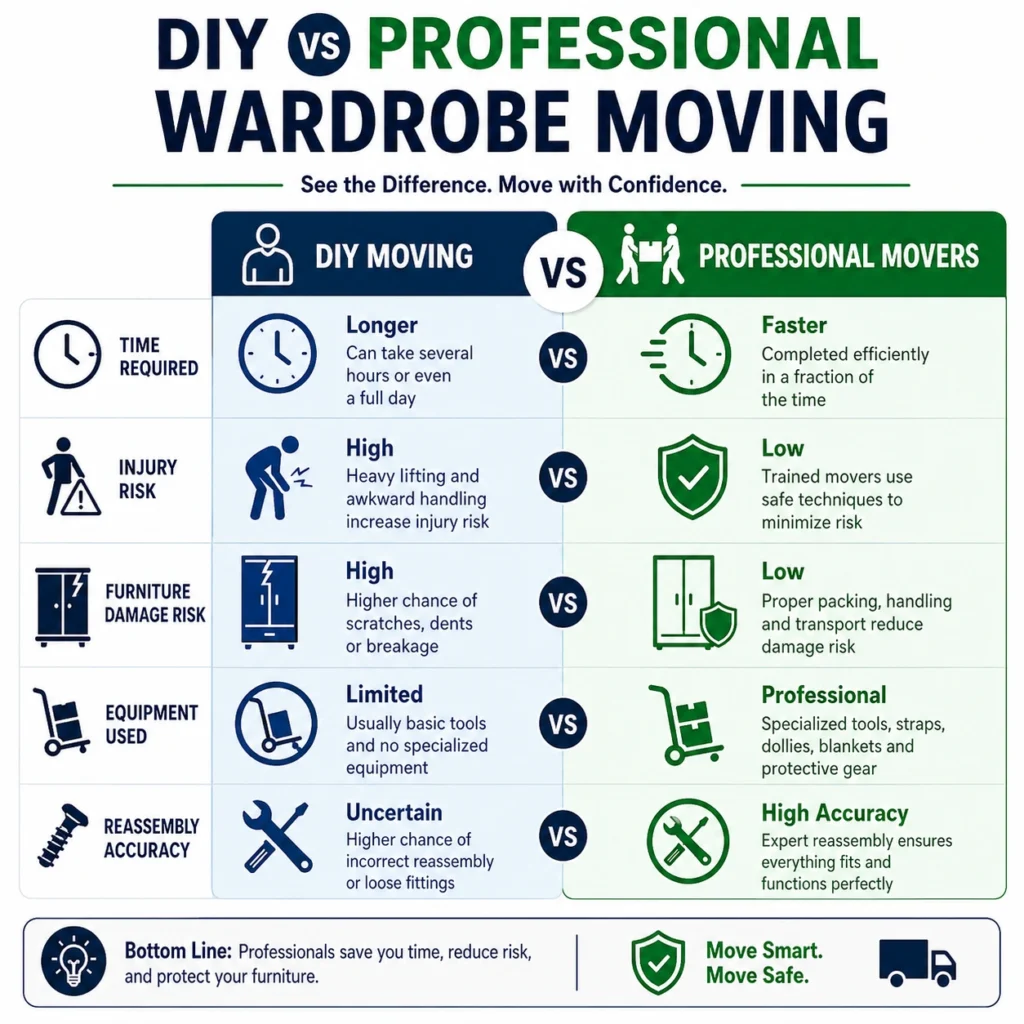
How Professional Movers Handle Wardrobes
Professional moving teams rarely rely on strength alone.
Instead, they use proven systems.
Typical equipment includes:
- Furniture dollies
- Lifting straps
- Protective blankets
- Corner protectors
- Stretch wrap
- Stair-climbing techniques
- Vehicle load restraints
This reduces the chance of both property damage and personal injury.
Professional movers also assess access points before moving begins, helping avoid surprises on moving day.
Should Flat-Pack Wardrobes Be Moved Assembled?
Usually not.
Flat-pack furniture is designed primarily for stationary use.
Every move places additional stress on connectors and joints.
Manufacturers commonly recommend dismantling large flat-pack furniture before relocation whenever practical to maintain structural integrity.
Planning Before Moving Day
Preparation makes moving much easier.
Measure:
- Wardrobe height
- Width
- Depth
Then measure:
- Doorways
- Hallways
- Staircases
- Lift entrances
- Vehicle loading area
Even a few centimetres can determine whether dismantling becomes necessary.
Creating a simple moving plan also helps everyone involved understand the safest route before lifting begins.
Is It Worth Hiring Professional Movers?
Large wardrobes are among the most difficult household items to relocate safely.
Hiring experienced movers in Harmondsworth can reduce the risks of injury, furniture damage, and delays, especially when dealing with oversized wardrobes, upper-floor flats, or properties with narrow staircases.
The right team can dismantle, protect, transport, and reassemble the wardrobe efficiently, allowing you to focus on the rest of your move.
What Would You Choose?
If you were moving tomorrow, would you dismantle your wardrobe first or try carrying it whole? Share your experience or biggest moving challenge in the comments—we’d love to hear what worked for you.
Frequently Asked Questions (FAQs)
1. How do you move a wardrobe without damaging it?
To move a wardrobe safely, empty it completely, remove shelves and drawers, secure the doors, and protect the surfaces with moving blankets or bubble wrap. Large or heavy wardrobes should usually be dismantled before moving to reduce the risk of damage to the furniture and your property.
2. Should I dismantle a wardrobe before moving?
Yes, dismantling is recommended for most large wardrobes, especially those with sliding doors, mirrors, or flat-pack construction. Taking it apart makes it easier to carry through narrow hallways, doorways, and staircases while reducing the chance of structural damage.
3. Can you move a wardrobe without taking it apart?
You can move a wardrobe without dismantling it if it is small, sturdy, and fits comfortably through all access points. However, always remove the contents, secure the doors, and ensure you have enough people to lift it safely.
4. How heavy is an average wardrobe?
The weight depends on the material and size. A small flat-pack wardrobe may weigh between 40–70 kg, while a large solid wood wardrobe can weigh well over 150 kg. Always check the manufacturer’s specifications if available before attempting to move it.
5. What is the safest way to carry a heavy wardrobe?
The safest method is to use proper lifting techniques, lifting straps, furniture dollies, and protective blankets. Lift with your legs, keep the wardrobe close to your body, avoid twisting, and never attempt to lift a heavy wardrobe alone.
6. How do professional movers move large wardrobes?
Professional movers assess the access route first, dismantle large wardrobes when necessary, wrap each component with protective materials, transport them using specialist equipment, and reassemble the furniture at the new location.
7. How long does it take to dismantle and reassemble a wardrobe?
Most standard wardrobes can be dismantled in 30–90 minutes and reassembled within 45–120 minutes, depending on their size, design, and complexity.
8. Can moving a wardrobe damage the flooring?
Yes. Dragging a wardrobe across wooden floors, laminate, tiles, or carpets can cause scratches, dents, or tears. Furniture sliders, lifting straps, and dollies help protect your flooring during the move.
9. How much does it cost to hire professional movers for a wardrobe?
The cost depends on the wardrobe’s size, the moving distance, property access, and whether dismantling and reassembly are required. Many professional movers offer fixed-price or hourly services based on the complexity of the move.
10. Why should I hire professional movers in Harmondsworth to move a wardrobe?
Experienced movers Harmondsworth have the tools, training, and equipment needed to move heavy wardrobes safely. They can dismantle, transport, protect, and reassemble your furniture while reducing the risk of injury and property damage.