Small Office Removals in Lambeth: How to Move Without Losing Your Working Week
Table of Contents
Moving a small office sounds easier than relocating a large workplace, but the pressure can be greater when every person is essential to daily operations. With small office removals Lambeth, the goal is not simply getting desks and boxes from one address to another. It is getting your team back online quickly, with documents, equipment and workstations where they belong.
A small office may have fewer desks, but not fewer risks. A move can involve IT equipment, documents, stock and furniture that is awkward to carry through stairs, lifts or narrow entrances.
The biggest problem is lost productive time. Staff spending Friday packing and reconnecting equipment can cost more than the removal charge.
With small office removals in Lambeth, access can affect the schedule. Before booking, check early loading arrangements, lift availability, building rules, parking restrictions and the time allowed for loading. Give these details to the mover early so the vehicle, crew and schedule match the building.
Plan the move around your working week
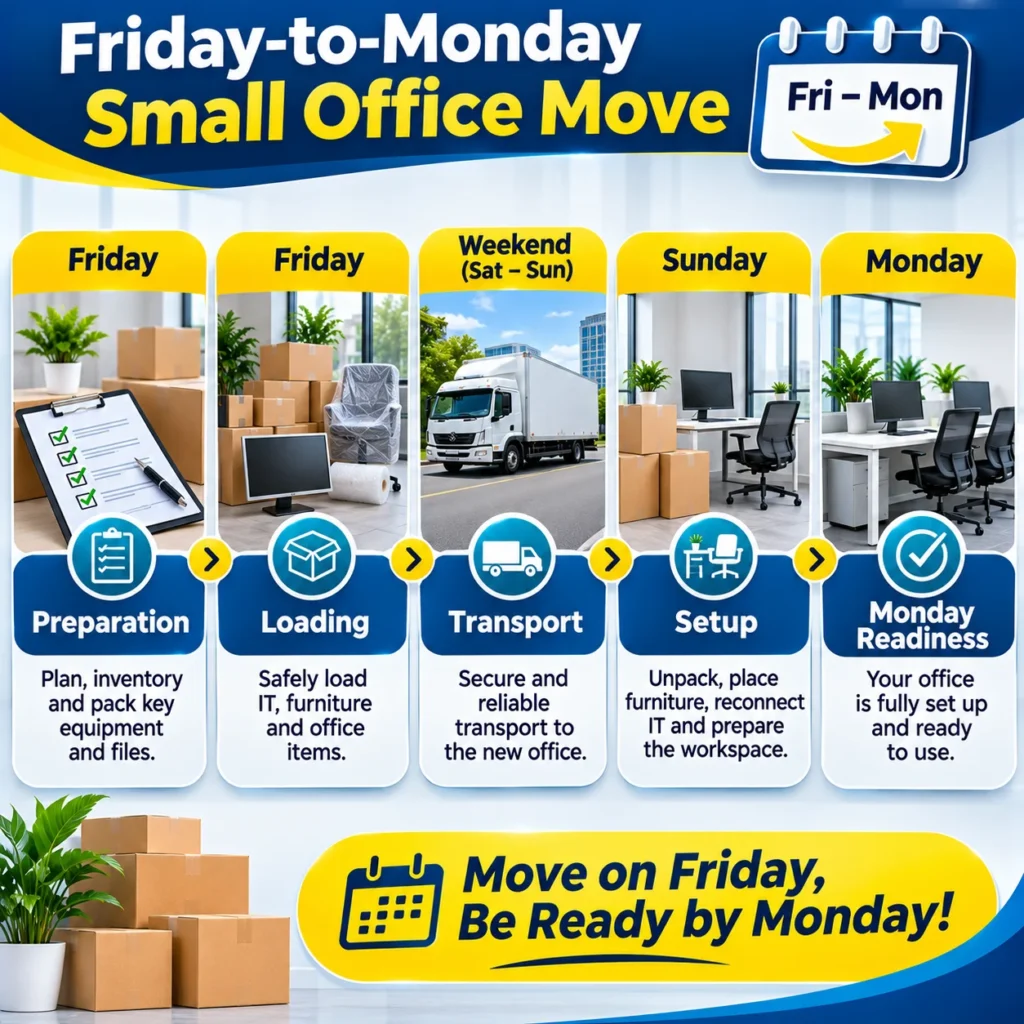
The easiest way to protect Monday morning is to work backwards from it. Decide when the new office must be operational, then set deadlines for packing, equipment preparation, access arrangements and the physical move.
For example, a small professional office could finish work at 4pm Friday, pack non-essential items beforehand, move furniture and boxed equipment Friday evening, reconnect essential systems Saturday, and use Sunday for checks. Staff then return to a prepared workplace rather than a room full of boxes.
This is where office relocation services London businesses use can be valuable: the moving plan should fit the company’s operating hours, not force employees to work around the move.
Build a practical moving-day sequence
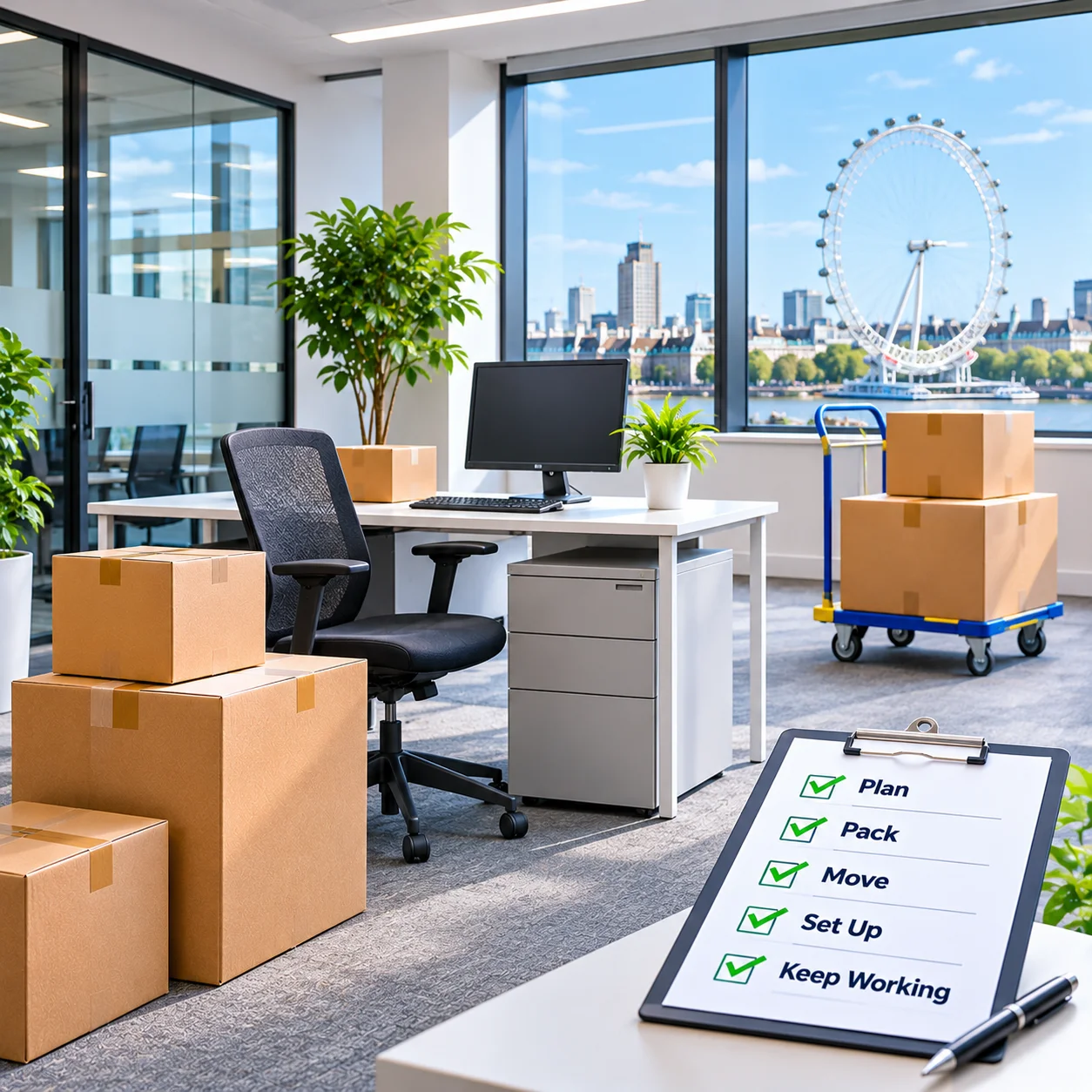
Small office removals Lambeth work better when every item has a destination before it enters the vehicle. Label boxes by room or workstation instead of using vague descriptions such as “office supplies”.
Create a simple floor plan. Number desks, then match those numbers to furniture, boxes and equipment. This reduces questions and prevents items being placed in the wrong area.
The loading order matters. Items needed first should be accessible rather than buried underneath everything else. Keep a separate “first-hour” box containing chargers, extension leads, basic tools, stationery and essential documents.
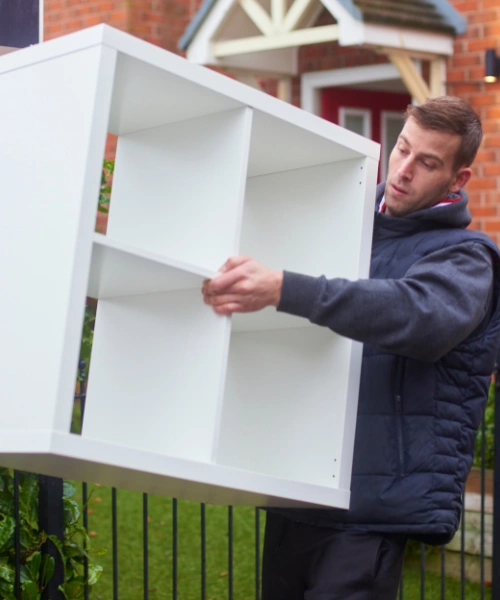
Do not ask employees to lift heavy cabinets simply because the office is small. The Health and Safety Executive says hazardous manual handling should be avoided where reasonably practicable, assessed when it cannot be avoided, and controlled to reduce injury risk. It also recommends suitable handling aids and changes to the task or environment where appropriate.
Protect IT and confidential information
IT equipment deserves its own plan. Back up data, photograph cable connections, label cables and keep power supplies with the correct equipment. If your business depends on a server, network cabinet or specialist equipment, decide in advance who handles shutdown, transport and reconnection.
Paper records need similar care. The ICO advises organisations to know where physical records are during movement, log transfers and keep records secure when transported or stored off-site.
For small office removals Lambeth, confidential files should not simply be placed in open boxes and left unattended. Use controlled containers, restrict access during the move and confirm that sensitive records have arrived.
Understand access and Lambeth logistics
A removal quote is only as useful as the careful information behind it. Tell the mover about stairs, lifts, loading distances, restricted access, building opening times and unusually large items.
Lambeth Council says businesses occupying commercial premises should keep business-rate information up to date. Its 2026 revaluation took effect on 1 April 2026, so check the new property’s details.
For small office removals Lambeth, these administrative checks are easy to overlook when the physical move is taking priority.
Control small office removals Lambeth costs without cutting corners
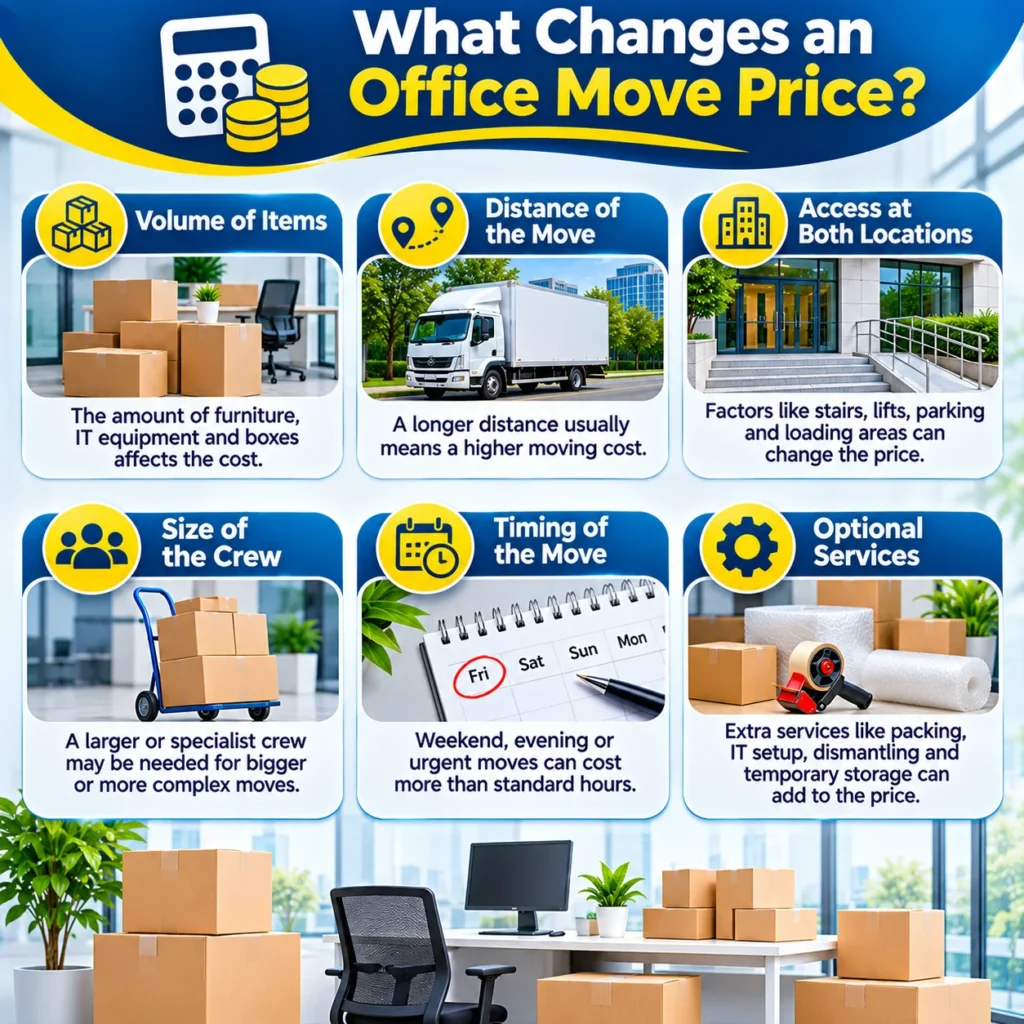
The cost of small office removals Lambeth depends on factors such as volume, distance, crew size, access, timing, packing requirements and whether furniture needs dismantling or reassembly. Comparing prices without comparing inclusions can be misleading.
Ask whether the quote covers loading, unloading, protection, stairs, waiting time, dismantling, packing and access-related charges. Confirm insurance arrangements and what happens if an item is damaged.
A cheaper move can become expensive if staff lose a working day, equipment is damaged or access delays the vehicle.
When professional movers make sense for small office removals Lambeth
DIY may work for a tiny workspace. With several desks, cabinets, monitors or restricted access, experienced movers can save staff time.
Sameday Removals provides office moves and commercial removals, with its quote process asking about floors, lifts, bulky items and collection and delivery details.
For businesses comparing office relocation services in London providers, look beyond the hourly rate. Check whether the company understands commercial access, can work around trading hours, communicates clearly and has the staffing and equipment required.
A simple 48-hour recovery plan
Before staff return, test internet, phones, computers, printers, power and customer-facing systems.
Keep one person responsible for the move checklist and another for IT. Photograph both premises if you need an internal record.
For small office removals Lambeth, the best outcome is not an impressive moving day. It is an ordinary Monday morning where employees can walk in, sit down and start working with minimal disruption.
If your Lambeth office needs to move without sacrificing a working day, would a planned evening or weekend relocation give your team the smoother Monday start you need?
Looking for removal service in London?
0795-145-5002
Frequently Asked Questions
1. How long does a small office move in Lambeth take?
The duration depends on the amount of furniture and equipment, access conditions, distance and preparation. A carefully planned small move can often be scheduled around normal working hours to reduce disruption.
2. Can an office move be completed at the weekend?
Yes, many commercial removal providers offer evening or weekend scheduling. Moving outside normal business hours can allow employees to finish work before the move and return to an operational office afterwards.
3. How can I reduce office downtime during a move?
Start by identifying the equipment and documents employees need first. Prepare labels, floor plans, access arrangements and IT requirements before moving day so the new office can be set up in the correct order.
4. What should I do with computers before an office relocation?
Back up important information and label cables, chargers and devices before equipment is disconnected. Businesses with servers or specialist infrastructure should also establish who is responsible for shutdown and reconnection.
5. How should confidential office documents be moved?
Keep sensitive records controlled throughout the relocation and avoid leaving them unattended in open boxes. The ICO recommends tracking physical records during movement and keeping them secure while transported or stored away from the normal workplace.
6. What affects the cost of a small office removal?
The main factors include the volume being moved, distance, number of movers, vehicle requirements, access, timing and additional services. Dismantling, packing, storage or difficult building access can also affect the final price.
7. Should employees help move office furniture?
Employees should not be expected to perform hazardous manual handling simply to reduce removal costs. HSE guidance recommends avoiding hazardous handling where reasonably practicable and assessing and controlling unavoidable risks.
8. What information should I give an office removal company?
Provide both addresses, floor numbers, lift availability, loading arrangements, parking or access restrictions, approximate inventory and any unusually heavy or bulky items. Accurate information helps the mover plan the correct vehicle, crew and schedule.
9. Is professional office relocation worth the cost for a small business?
It depends on the complexity of the move and the value of employee working time. For businesses with several workstations, heavy furniture, sensitive records or restricted access, professional support can reduce the amount of internal time spent on moving.
10. What should I check before reopening the new office?
Test essential systems before employees arrive, including internet, phones, computers, printers, power and customer-facing equipment. Check that desks and equipment are positioned correctly and that essential documents and supplies are accessible.