

How to Protect Yourself From Moving-House Identity Fraud
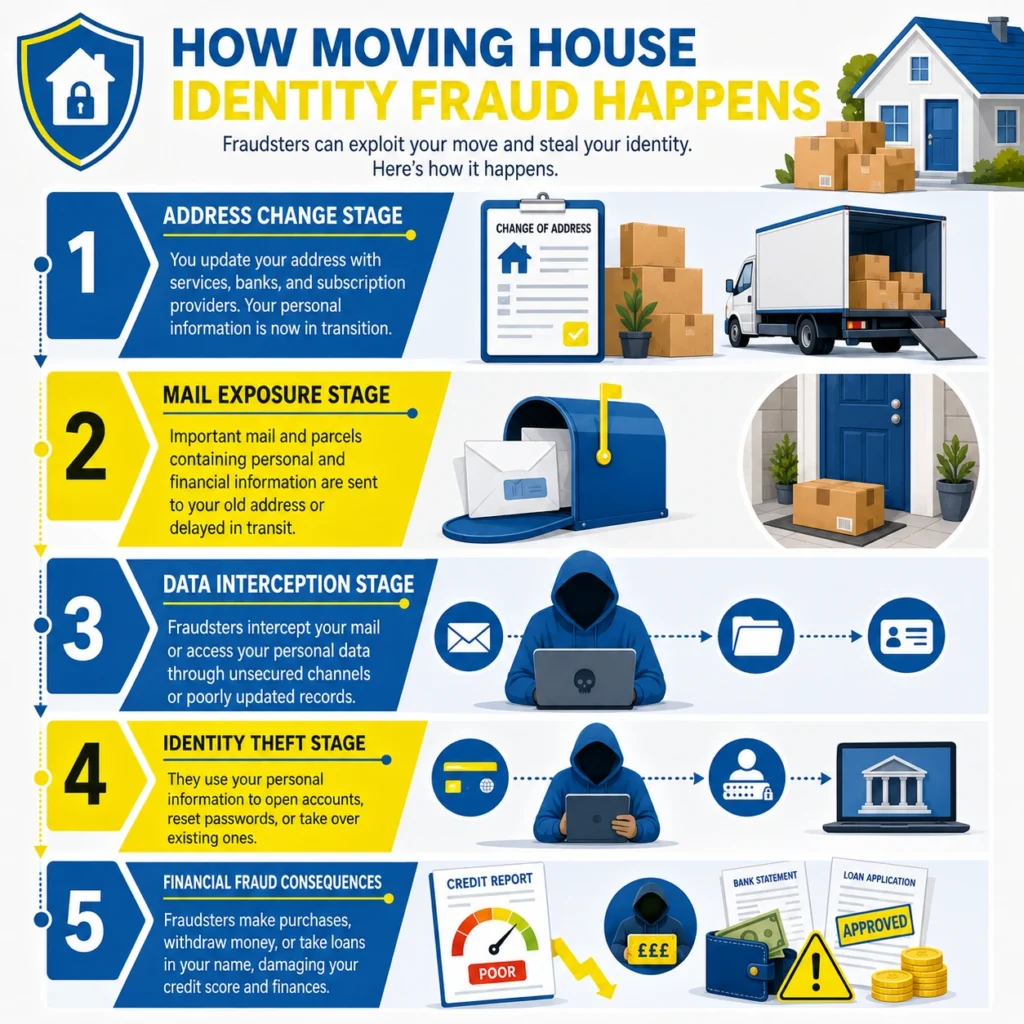
Moving home is often one of life’s most exciting milestones. However, while most people focus on packing boxes, changing utilities, and arranging transport, criminals see relocation as an opportunity. Moving house identity fraud has become an increasing concern across the UK, with fraudsters targeting gaps in communication, redirected mail, outdated records, and personal information exposed during the moving process.
Identity fraud can cause significant financial losses, damage credit ratings, and create months of administrative stress. According to UK police, identity fraud remains one of the most common forms of fraud, with criminals using stolen personal details to open accounts, apply for credit, and impersonate victims.
For homeowners, tenants, and anyone planning a move, understanding the risks is the first step toward protecting yourself.
Why Moving House Creates Opportunities for Identity Fraud
When you relocate, multiple organisations need your updated details. Banks, utility companies, insurers, healthcare providers, employers, and government agencies all require address changes.
This creates a period where sensitive information may still be sent to your old address. Criminals understand this vulnerability and may exploit delayed updates, intercepted mail, or publicly available information.
The UK’s Information Commissioner’s Office specifically advises people moving home to update financial providers and redirect mail to prevent personal information from falling into the wrong hands.
Common Types of Moving House Identity Fraud
Mail Interception and Address Fraud
One of the simplest methods used by fraudsters involves obtaining access to mail sent to an old address.
Bank statements, credit card offers, utility bills, and official documents often contain enough information for criminals to begin building a fraudulent identity profile.
Police guidance highlights that fraudsters frequently use old addresses to receive sensitive information and commit identity fraud.
New Credit Applications
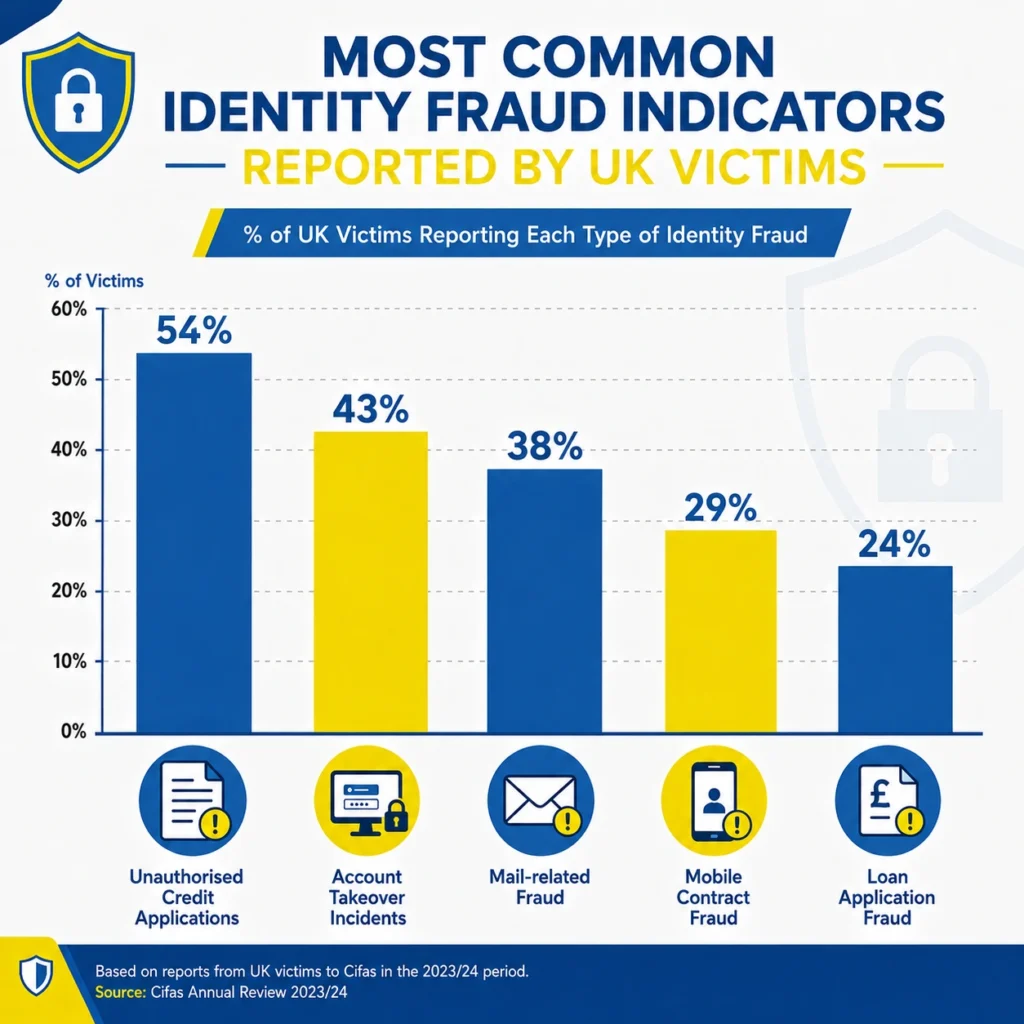
Criminals may use stolen personal information to apply for loans, mobile contracts, store cards, or credit accounts.
Because the application appears legitimate, victims often discover the fraud only after receiving debt collection notices or seeing changes in their credit reports.
Account Takeover Fraud
Identity thieves increasingly use stolen information to gain access to existing online accounts.
Recent UK fraud data shows account takeover fraud is becoming more prevalent as criminals gain access to personal information through phishing attacks, data breaches, and identity theft schemes.
Property and Address-Based Fraud
In some cases, criminals use a victim’s address to establish false identities or obtain services.
There have been reported incidents where fraudsters registered financial products or official correspondence at addresses where they did not reside.
Warning Signs That Your Identity May Have Been Compromised
Recognising the warning signs early can significantly reduce potential damage.
If you receive unfamiliar bills, loan approvals, credit card statements, or account notifications, investigate immediately.
Other warning signs include:
| Warning Sign | Potential Risk |
|---|---|
| Unexpected credit applications | Identity theft |
| Missing mail | Mail interception |
| Unknown accounts on credit reports | Fraudulent borrowing |
| Unexpected password reset emails | Account takeover |
| Collection notices for unknown debts | Credit fraud |
| Unfamiliar financial transactions | Identity misuse |

Step 1: Redirect Your Mail Immediately
One of the most effective ways to reduce moving house identity fraud risk is arranging mail redirection before moving day.
The ICO specifically recommends redirecting post when moving house to prevent sensitive information reaching former addresses.
Even after updating your address with key organisations, some correspondence may continue arriving at your previous property for several months.
Step 2: Update All Financial Institutions First
Many people update streaming services before updating banks. This can be a costly mistake.
Prioritise:
- Banks
- Credit card providers
- Mortgage lenders
- Insurance companies
- Pension providers
- Investment accounts
The ICO specifically recommends notifying banks, credit providers, utility companies, and service providers when relocating.
Keeping financial records current reduces opportunities for fraudsters to exploit outdated information.
Step 3: Monitor Your Credit Report During and After the Move
Many victims only discover identity fraud months after it occurs.
Regular credit monitoring allows you to identify suspicious activity before it escalates.
Check for:
- Unknown credit applications
- New accounts
- Incorrect addresses
- Unexpected credit searches
Monitoring should continue for at least six months following your move.
Moving House Fraud Risk Checker
Moving shifts your data. Check your current risk level and secure your new address.
Your Personal Fraud Risk Score:
Recommended Next Actions
Security Improvement Checklist
Step 4: Consider Protective Registration
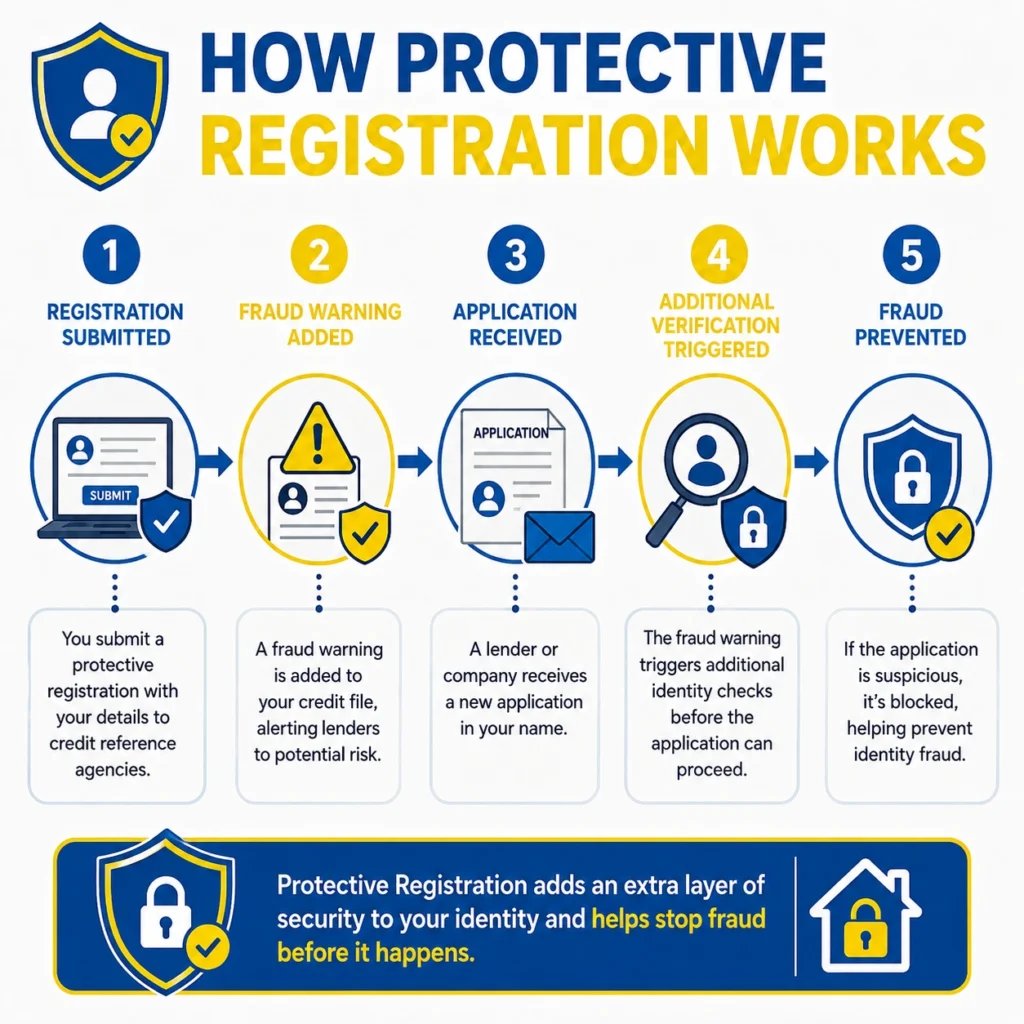
If you believe your information has been exposed or you are at heightened risk, fraud prevention experts recommend Protective Registration.
Cifas offers Protective Registration, which places a warning flag against your personal details so participating organisations perform additional identity checks when applications are made in your name.
The UK’s fraud reporting guidance also recommends considering this protection for individuals concerned about identity fraud.
Step 5: Secure Digital Accounts Before Moving
Physical documents are no longer the only target.
Today’s fraudsters often combine stolen addresses with compromised online credentials.
Before moving:
- Change important passwords
- Enable multi-factor authentication
- Review account recovery details
- Update contact information
- Remove outdated addresses
Recent UK fraud reporting shows account takeover fraud continues to increase as criminals leverage stolen personal information.
The Role of Professional House Removals London Services
Choosing reliable house removals London providers can also reduce risk.
Professional movers help minimize the chance of paperwork, financial documents, and personal records being misplaced during transit.
Before packing:
- Shred unnecessary documents
- Separate sensitive paperwork
- Transport passports and financial records personally
- Secure digital devices
Identity fraud often begins with surprisingly small pieces of information collected from multiple sources.
Comparison Table: Secure vs Risky Moving Practices
| Secure Practice | Higher-Risk Practice |
|---|---|
| Shredding old documents | Throwing paperwork into general waste |
| Mail redirection | Leaving post unmanaged |
| Credit monitoring | No post-move monitoring |
| MFA enabled | Password-only protection |
| Immediate address updates | Delayed notifications |
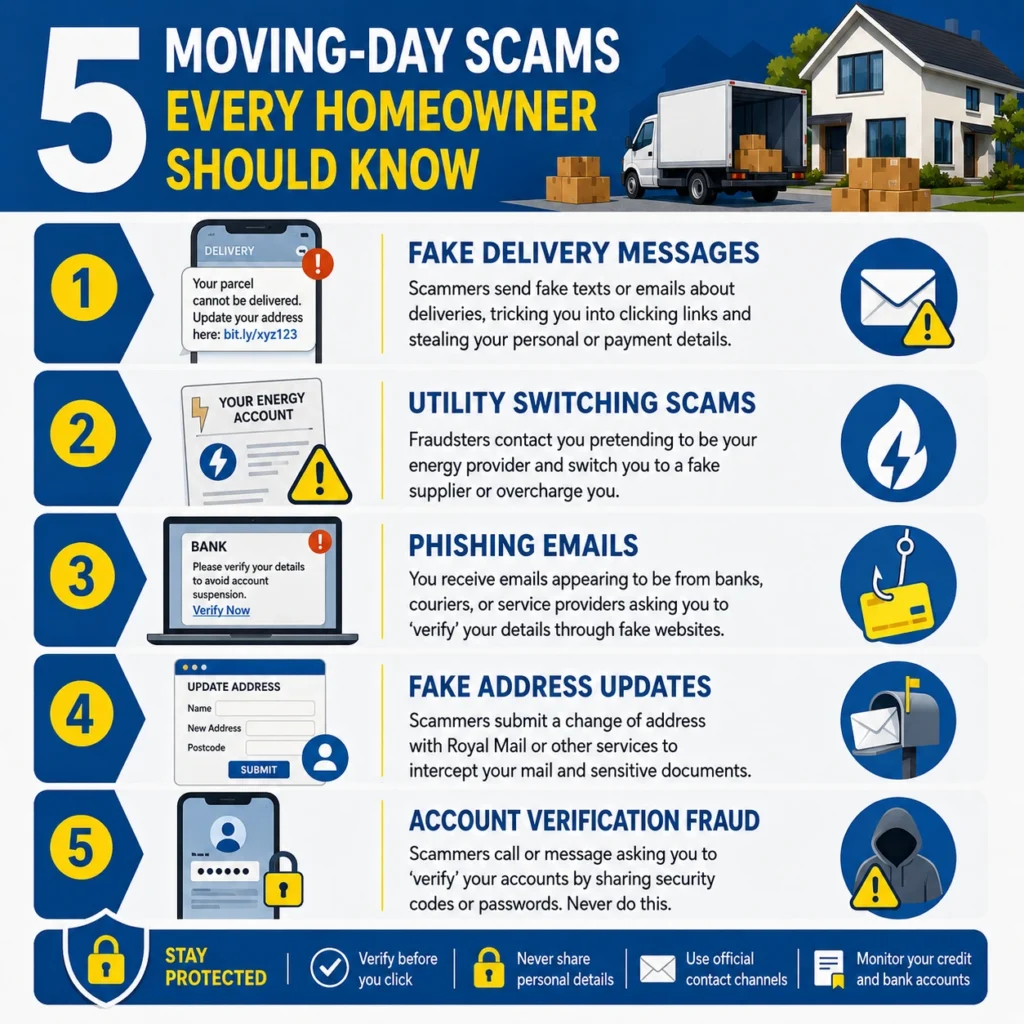
Step 6: Watch Out for Moving-Related Scams
Fraudsters frequently impersonate trusted organisations during relocation periods.
These scams may involve:
- Fake delivery notifications
- False utility company requests
- Phishing emails
- Fraudulent moving company communications
Royal Mail regularly warns consumers about scam messages that attempt to collect personal and financial information.
Never click links from unsolicited emails or text messages without verification.
What to Do If You Become a Victim
Fast action can significantly reduce financial damage.
If you suspect fraud:
Contact affected financial institutions immediately.
Report the incident through the UK’s fraud reporting channels.
Consider applying for Protective Registration and review your credit reports for suspicious activity. Fraud prevention organisations recommend reporting identity fraud as soon as it is identified.
Document every communication and keep records of all actions taken.
Building a Long-Term Identity Protection Strategy
Protecting yourself from moving house identity fraud does not stop once the boxes are unpacked.
Continue monitoring accounts, reviewing credit reports, updating passwords, and securing personal information.
Fraud prevention experts consistently emphasise that identity protection is an ongoing process rather than a one-time task. As fraud methods evolve, proactive monitoring remains one of the strongest defences available.
If you’re planning a move soon, which security step do you think most people overlook—and have you already added it to your moving checklist?
Frequently Asked Questions (FAQs)
1. What is moving house identity fraud?
Moving house identity fraud occurs when criminals use your personal information during or after a house move to open accounts, apply for credit, intercept mail, or access financial services in your name. Address changes can create opportunities for fraudsters if personal records are not updated promptly.
2. How can I protect myself from moving house identity fraud?
You can reduce the risk by redirecting your mail, updating your address with banks and service providers, monitoring your credit report, using strong passwords, enabling multi-factor authentication, and securely disposing of sensitive documents before moving.
3. Why is identity fraud more common when moving home?
Moving home often involves sharing personal information with multiple organisations. Delays in updating addresses, redirected post, and unsecured paperwork can make it easier for criminals to access personal data and commit fraud.
4. Should I redirect my mail when moving house?
Yes. Mail redirection is one of the most effective ways to prevent identity theft after moving. It ensures important documents, bank statements, and official correspondence do not fall into the wrong hands at your previous address.
5. How long should I monitor my credit report after moving?
Experts recommend checking your credit report regularly for at least six to twelve months after moving house. This helps identify any suspicious activity, unauthorised credit applications, or address-related fraud early.
6. What documents should I keep secure during a house move?
Important documents such as passports, driving licences, bank statements, mortgage paperwork, insurance documents, tax records, and utility bills should be kept secure and transported separately whenever possible.
7. Can professional house removals London companies help reduce identity fraud risks?
Yes. Reputable house removals London companies help ensure your belongings and important documents are handled securely during the move. Professional movers can also reduce the likelihood of sensitive paperwork being lost or misplaced.
8. What are the warning signs of identity fraud after moving house?
Common warning signs include missing mail, unexpected bills, unfamiliar credit applications, debt collection letters, unknown accounts appearing on your credit report, and suspicious activity on existing accounts.
9. What should I do if I become a victim of moving house identity fraud?
Contact your bank and affected service providers immediately, report the fraud to the relevant authorities, monitor your credit file, change passwords on important accounts, and consider registering for identity protection services.
10. How soon should I update my address when moving house?
You should update your address as soon as possible with banks, utility providers, insurers, employers, healthcare providers, and government agencies. The faster you update your records, the lower the risk of identity fraud.