

The Cheapest Day of the Week to Move House in London
Moving house in London can be one of the most expensive parts of relocating. Between solicitor fees, deposits, packing materials, and removal costs, expenses can add up quickly. That’s why many homeowners and tenants ask the same question: what is the cheapest day to move house in London?
The answer may surprise you. While many people automatically choose Fridays or weekends for convenience, data consistently shows that moving on less popular days can significantly reduce your costs. Understanding how demand affects pricing can help you save hundreds of pounds while securing better availability from professional movers London residents rely on.
Why the Day You Move Matters
The moving industry operates much like airlines and hotels. Prices rise when demand increases and fall when demand is lower.
According to HomeOwners Alliance, around 29% of UK home moves take place on Fridays, making it the most popular moving day in the country. Sunday is the least popular day, accounting for just 5% of moves.
When demand peaks, removal companies often have limited availability. This naturally pushes prices upward, especially in busy cities like London where housing turnover remains high throughout the year.
What Is the Cheapest Day to Move House in London?
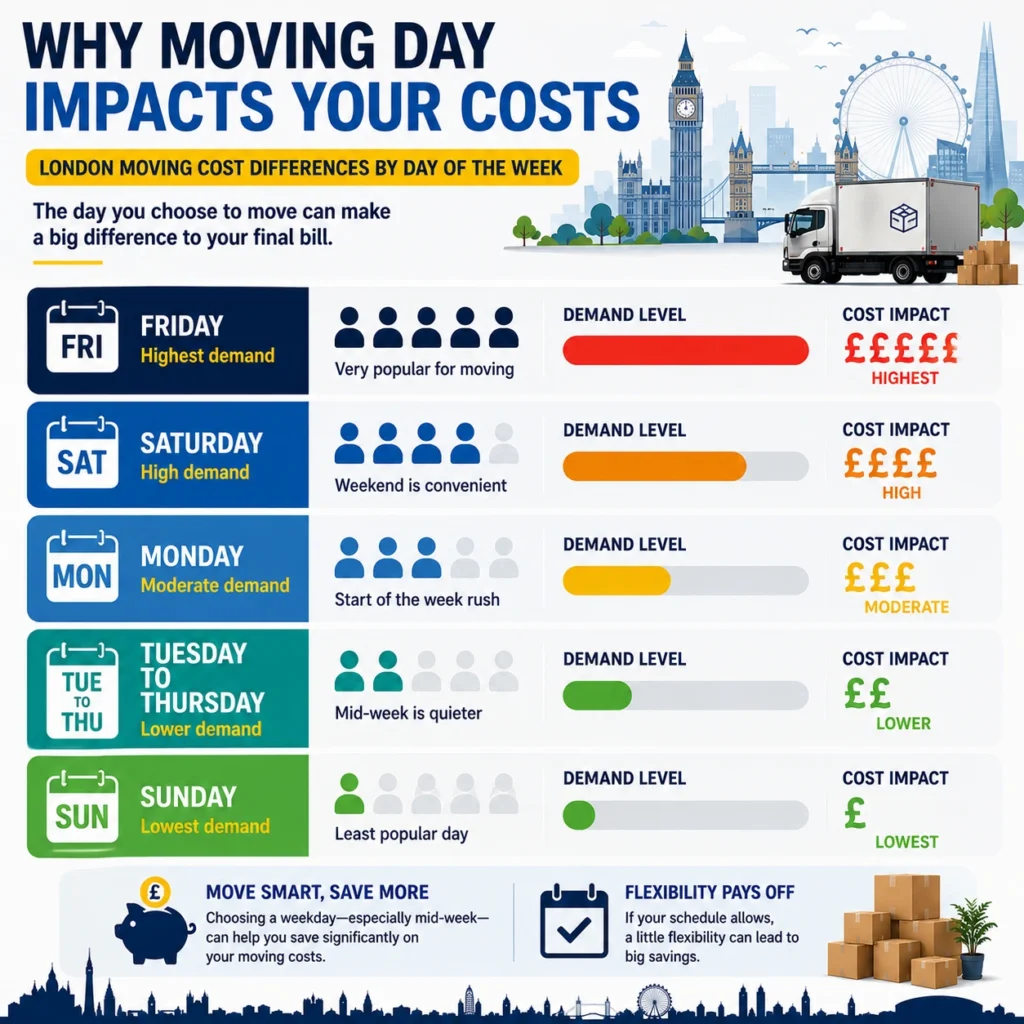
Industry data points to Sunday as the cheapest day to move house in many UK markets. Compare My Move‘s analysis found Sunday to be the lowest-cost day, while Friday remained one of the most expensive options.
However, in practical terms for London residents using professional removal companies, Tuesday, Wednesday, and Thursday often offer the best combination of lower pricing, greater availability, and operational efficiency. Several removal industry studies highlight midweek moves as consistently cheaper due to reduced demand.
Comparison Table: Typical Demand Levels
| Day | Demand Level | Typical Cost Range |
|---|---|---|
| Monday | Moderate | Medium |
| Tuesday | Low | Lower |
| Wednesday | Low | Lower |
| Thursday | Low-Medium | Lower |
| Friday | Very High | Highest |
| Saturday | High | High |
| Sunday | Lowest | Lowest to Moderate |
Why Fridays Are Usually the Most Expensive
There is a reason why Friday dominates the UK moving calendar.
Most property completions occur on Fridays because buyers and sellers want the weekend to unpack and settle into their new homes. HomeOwners Alliance reports that nearly one-third of all moves take place on Fridays.
This creates intense competition for:
- Removal companies
- Storage facilities
- Estate agents
- Conveyancers
- Van hire providers
Research from moving industry sources indicates Friday moves can command premiums of 15% to 20% compared to similar midweek bookings in London.


How Much Can You Save by Moving Midweek?
One of the biggest advantages of flexible scheduling is cost reduction.
Industry estimates suggest that moving midweek can save between 10% and 25% compared with weekend moves. Some examples show a £1,000 Saturday move costing as little as £750–£850 on a quieter weekday.
For larger London moves involving multiple bedrooms, those savings can become substantial.
A lower-demand booking often means:
- Better removal company availability
- More flexible booking slots
- Reduced risk of delays
- Less traffic congestion around key moving times
- Greater opportunity to negotiate prices
London-Specific Factors That Affect Moving Costs
London presents unique challenges compared with other UK locations.
Heavy traffic, parking restrictions, congestion charges, controlled parking zones, and limited loading areas can all increase the complexity of a move.
When demand spikes on Fridays and weekends, these challenges become even more significant.
Professional movers London homeowners trust often schedule their busiest routes around Friday completions. Choosing a Tuesday or Wednesday frequently allows crews to operate more efficiently, which can help keep overall costs lower.
London Moving Cost Estimator
Get a quick operational estimate for your London move and discover immediate cost-saving adjustments.
Estimated Moving Cost
*Calculated using standard vehicle running costs and professional London labor scales.
Smart Relocation Tip

The Cheapest Time of Month to Move
The day of the week is only part of the equation.
The timing within the month also affects pricing.
Month-end periods are particularly busy because:
- Rental agreements expire
- Mortgage completions occur
- Tenancy contracts renew
As a result, the last Friday of the month often becomes one of the busiest moving days of the year. HomeOwners Alliance forecasts more than 22,000 moves on certain peak Fridays.
If possible, consider scheduling your move:
- Mid-month
- Midweek
- Outside school holidays
These factors often combine to produce the lowest removal quotes.
Does the Season Affect Moving Prices?
Absolutely.
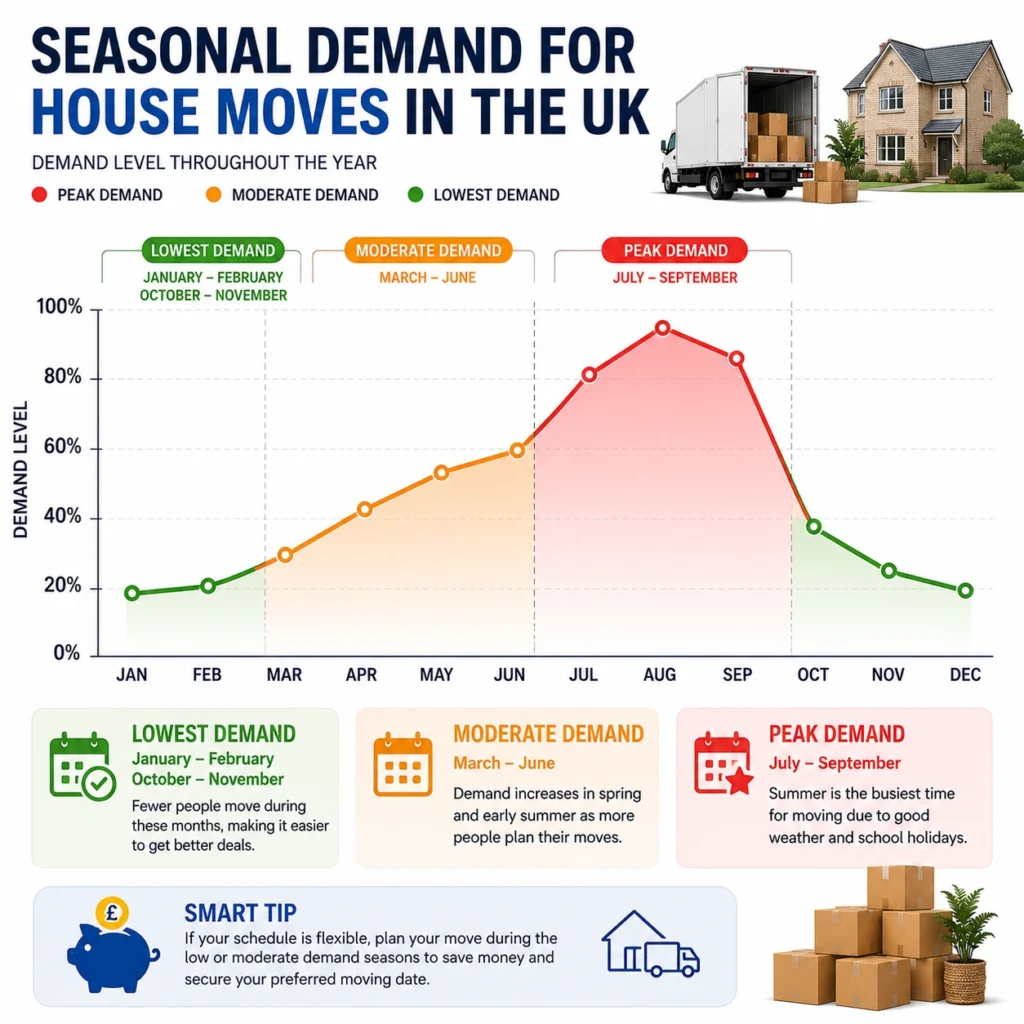
Summer remains the UK’s busiest moving season. August consistently ranks among the most popular months for relocation activity.
Families often move during school holidays, increasing competition for removal services.
By contrast, quieter periods such as January, February, October, and November can offer lower pricing and improved availability.
If your schedule is flexible, combining an off-peak month with a midweek move can generate meaningful savings.
How Early Should You Book Movers in London?
One of the most common mistakes people make is leaving arrangements until the last minute.
As demand increases, available slots disappear quickly.
For the best pricing:
- Book 4–8 weeks ahead for standard moves
- Book 8–12 weeks ahead during summer
- Compare at least three removal quotes
Early booking not only secures availability but can also protect you from peak-demand price increases.
How to Reduce Removal Costs Beyond Choosing the Right Day
Selecting the cheapest day to move house in London is only one part of reducing expenses.
Decluttering before moving can significantly reduce the volume of belongings transported. Fewer items often mean smaller vehicles, less labour, and shorter loading times.
Packing early can also reduce costs if you decide to handle some of the preparation yourself. Industry experts consistently recommend comparing multiple quotes and maintaining flexibility on moving dates whenever possible.
Another often-overlooked factor is accessibility. Ensuring clear parking access and reserved loading space can help reduce delays on moving day.
Why Midweek Moves Often Create a Better Experience
While saving money is important, there are additional benefits to avoiding peak moving days.
Less crowded schedules mean removal teams typically have more flexibility. Estate agents, solicitors, and property managers are also less overwhelmed.
This can reduce the risk of delays, which become far more common during peak Friday completion periods. Industry surveys have shown that removal firms experience significantly higher disruption levels during busy moving days.
For many London residents, a smoother move is just as valuable as the financial savings.
If you’re planning a move this year, would you rather save money with a quieter midweek move or pay extra for the convenience of a Friday? Share your experience and let us know which moving day worked best for you.
Frequently Asked Questions (FAQs)
1. What is the cheapest day to move house in London?
The cheapest day to move house in London is usually Tuesday, Wednesday, or Thursday. These midweek days typically have lower demand than Fridays and weekends, allowing removal companies to offer more competitive pricing and greater availability.
2. Why are Friday house moves more expensive?
Friday is the most popular moving day in the UK because many property completions occur before the weekend. Higher demand for removal services often leads to increased prices, limited availability, and busier schedules.
3. How much can I save by moving house midweek in London?
Many homeowners and tenants can save between 10% and 25% by choosing a midweek move instead of a Friday or weekend. Actual savings depend on property size, distance, and the services required.
4. When should I book movers in London to get the best price?
For the best rates, it is recommended to book movers in London at least 4 to 8 weeks in advance. During peak moving seasons, such as summer, booking 8 to 12 weeks ahead can help secure lower prices and preferred dates.
5. What is the cheapest month to move house in London?
January, February, October, and November are often among the cheapest months to move. These periods typically experience lower demand compared to summer months and school holiday seasons.
6. Are weekend house moves more expensive than weekday moves?
Yes, weekend house moves are generally more expensive because of increased demand. Many people prefer moving on Saturdays and Sundays to avoid taking time off work, which can lead to higher removal costs.
7. Does the end of the month affect moving costs?
Yes, moving at the end of the month is often more expensive. Many tenancy agreements and mortgage completions occur during this period, creating higher demand for removal companies and driving up prices.
8. How can I reduce the cost of moving house in London?
You can reduce moving costs by choosing a midweek moving date, booking early, decluttering before the move, packing your own belongings, comparing multiple removal quotes, and avoiding peak moving periods.
9. Are professional movers in London worth the cost?
Professional movers in London can save time, reduce stress, and protect valuable belongings during the relocation process. Experienced removal teams often complete moves more efficiently than DIY alternatives, especially for larger properties.
10. How far in advance should I compare removal company quotes?
It is advisable to compare removal company quotes as soon as your moving date becomes clear. Comparing at least three quotes several weeks in advance can help you find the best combination of price, service quality, and availability.