

Cost to Move a 2-Bedroom House: What You’ll Pay in 2026
Moving home is exciting, but it can quickly become stressful when you don’t know how much it will cost. Whether you’re relocating across the street or moving to another city, understanding the 2 bedroom removal cost before booking helps you avoid unexpected expenses and plan your budget with confidence.
Removal prices have changed over the past few years due to higher fuel prices, increased labour costs, vehicle running expenses, and inflation. In 2026, knowing what affects your moving quote is more important than ever. This guide explains average removal costs, what influences pricing, and how you can reduce your moving expenses without sacrificing quality.
How Much Does a 2 Bedroom Removal Cost in 2026?
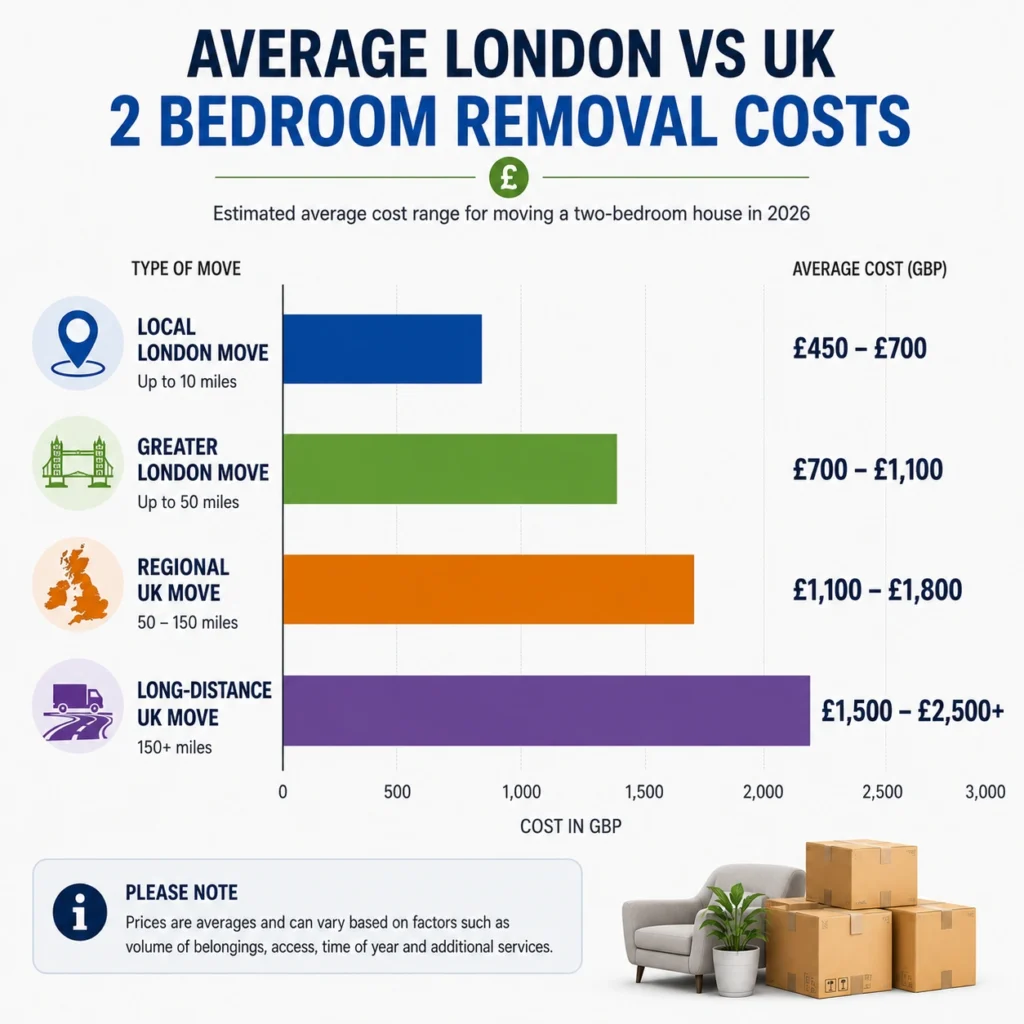
A typical UK move for a two-bedroom property usually costs between £450 and £1,300, depending on the distance travelled, access to both properties, the amount of furniture, and any additional services required.
For shorter local moves, homeowners generally pay much less than families relocating hundreds of miles across the country. Packing services, furniture dismantling, and difficult property access can also increase the final quote.
According to the Office for National Statistics (ONS), inflation and transport-related operating costs have remained one of the largest contributors to rising service prices across the UK. These increases have influenced removal company pricing throughout recent years.

Average Removal Costs by Distance
| Move Distance | Estimated Cost (2026) | Typical Time |
|---|---|---|
| Up to 10 miles | £450–£700 | 4–6 hours |
| 10–30 miles | £550–£850 | 5–7 hours |
| 30–75 miles | £700–£1,000 | Full day |
| 75–150 miles | £900–£1,200 | Full day |
| 150+ miles | £1,100–£1,300+ | 1–2 days |
These estimates assume a standard two-bedroom home with average household furniture and no specialist items.
What Affects the Cost of a Two-Bedroom House Move?
No two home moves are identical. Professional removal companies calculate prices based on several factors rather than charging one fixed rate.
Understanding these variables makes comparing quotations much easier.
Moving Distance
Distance is usually the biggest pricing factor.
Long-distance removals involve higher fuel consumption, longer staff working hours, motorway charges, overnight accommodation in some cases, and greater vehicle wear.
For example, moving within the same London borough costs considerably less than relocating from London to Manchester.
Volume of Furniture
A two-bedroom flat occupied by one person will usually contain much less furniture than a family home with children.
Removal companies estimate the total volume in cubic feet or cubic metres before selecting the appropriate vehicle.
Typical household contents include:
- Beds
- Sofas
- Dining furniture
- Wardrobes
- White goods
- TVs
- Boxes
- Garden furniture
The greater the volume, the larger the removal van and crew required.
Property Access
Access can significantly affect labour time.
Examples include:
- Flats without lifts
- Narrow staircases
- Restricted parking
- Long walking distances
- Apartment buildings
- Rural properties
Even a relatively small move may take much longer if removal staff must carry furniture over longer distances.
Packing Services
Many homeowners choose professional packing because it saves time and reduces the chance of damaged belongings.
Professional movers use stronger moving cartons, bubble wrap, wardrobe boxes and specialist packing materials designed for fragile items.
According to the British Association of Removers (BAR), professional packing helps minimise the risk of damage during transportation when compared with poor-quality packing materials.
Furniture Assembly
Large wardrobes, dining tables and beds often require dismantling before loading.
Professional assembly services can reduce the risk of furniture damage while speeding up loading and unloading.

Average 2 Bedroom House Removal London Costs
The 2 bedroom house removal London market is one of the busiest in the UK.
While London moves often involve shorter distances, they frequently cost more because of traffic congestion, parking restrictions, controlled parking zones, narrow streets and higher labour costs.
Typical London prices in 2026 include:
| London Move Type | Estimated Price |
|---|---|
| Studio to 2-bedroom flat | £450–£700 |
| Two-bedroom flat | £550–£900 |
| Two-bedroom house | £650–£1,000 |
| Larger two-bedroom family home | £900–£1,200+ |
Central London properties often require parking permits or additional walking distances, increasing labour time.
Fixed Price vs Hourly Pricing
Removal companies usually offer either hourly pricing or fixed-price quotations.
Each pricing model has advantages depending on the complexity of your move.
| Fixed Price | Hourly Rate |
|---|---|
| Price agreed before moving day | Pay only for actual hours worked |
| Easier budgeting | Suitable for small local moves |
| Less affected by traffic delays | Costs can increase if delays occur |
| Ideal for long-distance removals | Better for simple same-day moves |
| Greater price certainty | Less predictable total cost |
A fixed quotation often provides greater peace of mind when moving a fully furnished two-bedroom property because unexpected delays are less likely to affect the final bill.
2 Bedroom Removal Cost Calculator
Get an instant operational breakdown, packing estimate, and crew recommendation for your 2-bedroom move.
Total Estimated Moving Budget
*Includes base removal labor, vehicle routing, packing options & access adjustments.
Operational Advice
Hidden Costs Many Homeowners Forget
The cheapest quotation isn’t always the most affordable once additional charges are included.
Before booking, ask whether your quotation includes every expected cost.
Common additional charges include:
| Additional Service | Typical Cost |
|---|---|
| Packing materials | £50–£250 |
| Professional packing | £150–£450 |
| Furniture dismantling | £40–£200 |
| Waiting time | Hourly charge |
| Parking permits | Varies by council |
| Storage | Daily or weekly charge |
| Heavy item surcharge | Depends on item |
Reading your quotation carefully helps avoid unpleasant surprises on moving day.
Why Comparing Multiple Quotes Can Save You Hundreds
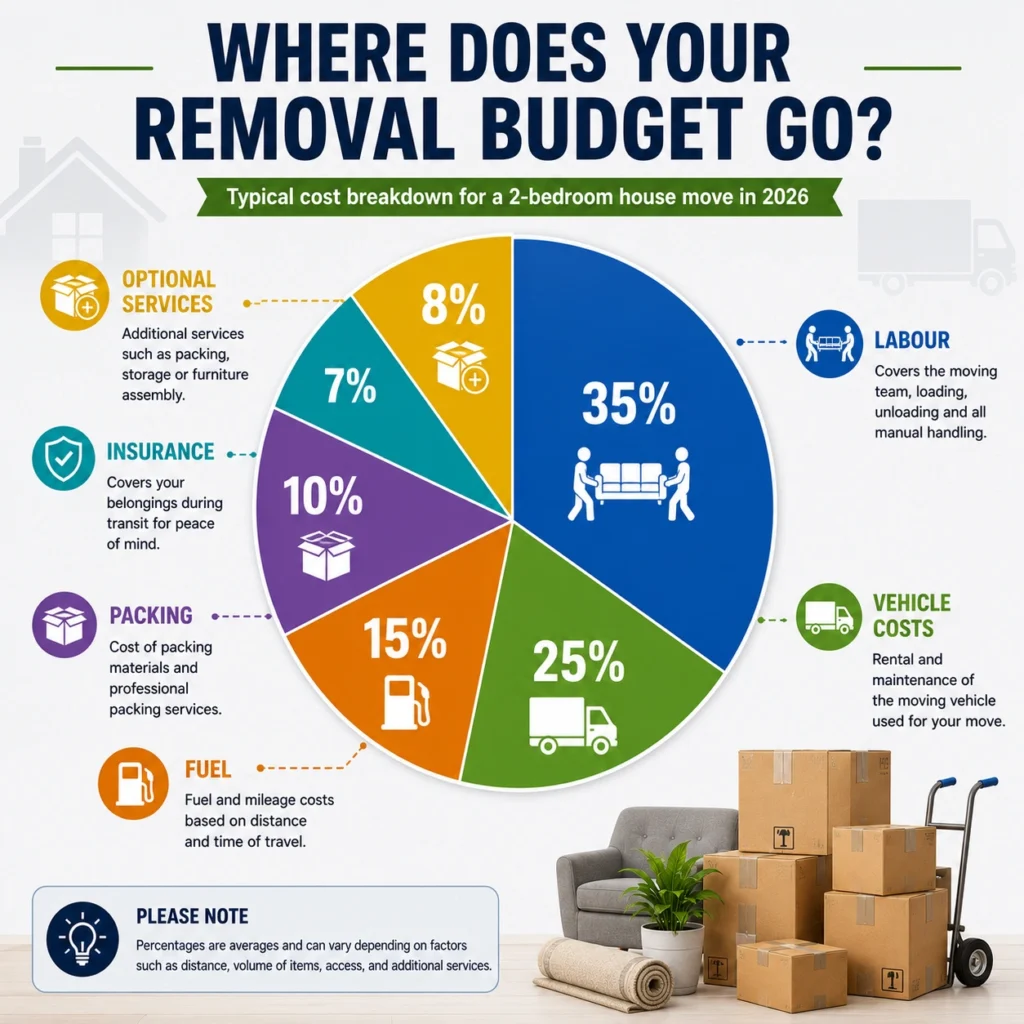
One of the biggest mistakes people make is accepting the first quote they receive. Prices can vary significantly between removal companies, even for similar jobs, because every business calculates labour, travel, insurance, and vehicle costs differently.
Research from the Competition and Markets Authority (CMA) consistently encourages consumers to compare multiple service providers before making purchasing decisions, as shopping around often leads to better value and improved service quality. When requesting quotes, make sure each company is pricing the same services so you can make a fair comparison rather than simply choosing the lowest figure.
Rather than focusing only on price, compare what’s included. A slightly higher quote that covers packing materials, furniture dismantling, insurance, and fuel may offer better overall value than a cheaper estimate with several additional charges added later.
Best Time to Move a Two-Bedroom House and Save Money
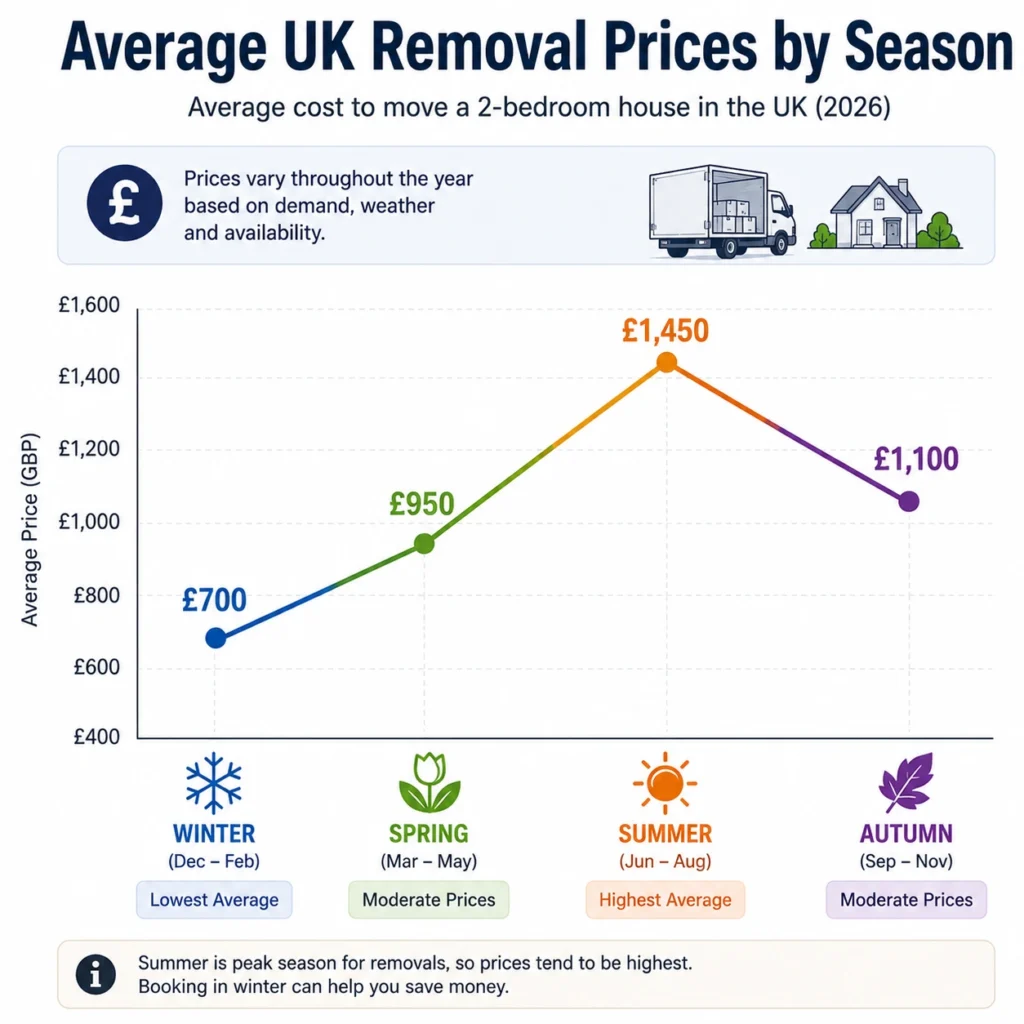
The day and season you choose can make a noticeable difference to your moving bill. Removal companies are often busiest during school holidays, the end of each month, and weekends. Higher demand usually means higher prices and fewer available booking slots.
If your moving date is flexible, consider booking during the middle of the week or in the middle of the month. These periods are often quieter, giving you a better chance of securing a competitive quote.
Booking several weeks in advance can also help. Early bookings give removal companies more time to plan their schedules, and you have more opportunities to compare prices before making a decision.
How to Reduce Your 2 Bedroom Removal Cost
Saving money doesn’t always mean choosing the cheapest company. Good planning often reduces costs without increasing stress.
Decluttering before moving is one of the easiest ways to lower your bill. Fewer belongings mean fewer boxes, less loading time and, in many cases, a smaller removal vehicle.
Packing some non-fragile items yourself can also reduce costs. Clothes, books and decorations are usually simple to pack if you use strong moving boxes and label everything clearly.
If possible, reserve parking close to both properties. Easy vehicle access helps the removal team work more efficiently, reducing the overall time required.
Finally, request at least three written quotations. Comparing like-for-like services helps you understand the real value of each quote rather than simply choosing the lowest price.

Is It Cheaper to Move Yourself?
Hiring a van may seem like the cheapest option at first, but the total cost is often higher than expected once everything is included.
DIY moving usually involves:
- Van hire
- Fuel
- Insurance
- Packing materials
- Extra helpers
- Multiple journeys
- Personal time
Professional removal companies already include experienced movers, suitable vehicles and specialist equipment designed to transport household furniture safely.
If you have valuable furniture, heavy appliances or a long-distance move, professional removals often provide better overall value despite the higher upfront cost.
| Expense | DIY Move | Professional Removal |
|---|---|---|
| Van Hire | Required | Included |
| Fuel | Extra | Usually Included |
| Loading Equipment | May Need to Hire | Included |
| Heavy Lifting | Yourself | Professional Crew |
| Furniture Protection | Limited | Professional Packing Available |
| Time Required | High | Much Lower |
| Risk of Damage | Higher | Lower |
Why Professional Removals Can Save Money in the Long Run
Although many people focus on the initial quote, the overall value is just as important.
Professional movers know how to load vehicles efficiently, protect delicate furniture and complete moves within a planned schedule. This reduces the chance of accidental damage, delays and costly mistakes.
Many reputable removal companies also offer Goods in Transit and Public Liability Insurance, providing additional reassurance during your move.
Choosing an experienced removal team may help prevent replacement costs for damaged furniture or broken appliances, which can easily exceed any savings made by selecting the cheapest option.
Planning Your Moving Budget
A realistic budget should cover more than just the removal company.
Consider including:
Adding a small contingency fund can help cover unexpected costs without affecting your overall moving budget.
Choosing the Right Removal Company
Price should never be the only factor when selecting a removal company.
Look for clear quotations, transparent pricing and companies that explain exactly what is included. Reading recent customer reviews and checking whether insurance is available can also help you make a more informed decision.
When comparing quotations, ask questions such as:
- Does the quote include VAT?
- Are fuel costs included?
- Is dismantling furniture included?
- Are packing materials included?
- Is insurance available?
- Are there additional waiting-time charges?
Understanding these details before booking reduces the chance of unexpected charges on moving day.
Moving Preparation Checklist & Timeline
Generate a personalized countdown, identify urgent missing tasks, and print your step-by-step moving plan.
⚠️ Priority Outstanding Tasks
Personalised Moving Timeline & Checklist
4 Weeks Out (Preparation & Logistics)
2 Weeks Out (Packing & Utilities)
1 Week Out (Final Countdown)
Moving Day (Execution)
Ready to Estimate Your Moving Costs?
Every move is different, which is why comparing quotations and understanding what affects pricing is so important. Whether you’re planning a local move or relocating across the UK, knowing the expected 2 bedroom removal cost helps you budget with confidence and avoid unnecessary surprises.
Have you started planning your move yet? Share your moving distance, property type or biggest moving concern in the comments, or request a personalised quote to see how much your move could cost in 2026.
Frequently Asked Questions (FAQs)
1. How much does a 2 bedroom removal cost in the UK?
The average 2 bedroom removal cost in the UK ranges from £450 to £1,300 in 2026. The final price depends on factors such as the moving distance, the amount of furniture, property access, packing services, and whether you need furniture dismantling or reassembly. Local moves are generally more affordable than long-distance relocations.
2. How much does a 2 bedroom house removal in London cost?
A typical 2 bedroom house removal London service costs between £550 and £1,200. Prices can be higher in Central London due to congestion, parking restrictions, controlled parking zones, and increased labour costs. Requesting multiple quotes helps you find the best value.
3. What factors affect the cost of moving a 2 bedroom house?
Several factors influence removal costs, including:
- Moving distance
- Volume of furniture and boxes
- Property access (stairs, lifts, parking)
- Packing and unpacking services
- Furniture dismantling and assembly
- Moving date and season
- Specialist or heavy items such as pianos or safes
4. Is it cheaper to hire a removal company or move yourself?
For small local moves, hiring a van yourself may seem cheaper. However, once you add fuel, insurance, packing materials, equipment hire, and your time, a professional removal company often offers better overall value. Professionals also reduce the risk of damage and complete the move more efficiently.
5. When is the cheapest time to move house?
Mid-week and mid-month moves are usually the most affordable because demand is lower. Avoid weekends, bank holidays, school holidays, and the end of the month, when removal companies are typically busiest and prices may increase.
6. Do removal companies provide packing services?
Yes. Most professional removal companies offer optional packing and unpacking services. They use high-quality packing materials and proven techniques to protect fragile belongings, furniture, electronics, and valuable items during transport.
7. How long does it take to move a 2 bedroom house?
Most local two-bedroom house moves take between 4 and 8 hours, while long-distance moves may require a full day or more. The duration depends on travel distance, property access, traffic conditions, and the number of belongings being moved.
8. Are removal companies insured?
Reputable removal companies usually provide Goods in Transit and Public Liability Insurance. Before booking, always ask what insurance cover is included and whether additional protection is available for high-value items.
9. How can I reduce my 2 bedroom removal cost?
You can lower your moving costs by decluttering before moving, packing non-fragile items yourself, booking your move early, choosing a weekday, ensuring easy parking access, and comparing quotes from several removal companies.
10. How many movers are needed for a 2 bedroom house?
Most two-bedroom house moves require 2 to 3 professional movers and a Luton van. Larger homes with heavy furniture or difficult access may require a larger crew to complete the move safely and efficiently.