
Home Furniture Removals in Merton: The Furniture That Usually Causes the Biggest Problems
Table of Contents
Planning home furniture removals Merton residents can rely on involves more than loading items into a van. Large sofas, wardrobes, beds, dining tables and delicate cabinets can create serious problems when doorways, staircases, lifts or parking areas are difficult to access. Knowing which pieces need the most planning can make moving day safer, faster and less stressful.
Why Some Furniture Is Harder to Move
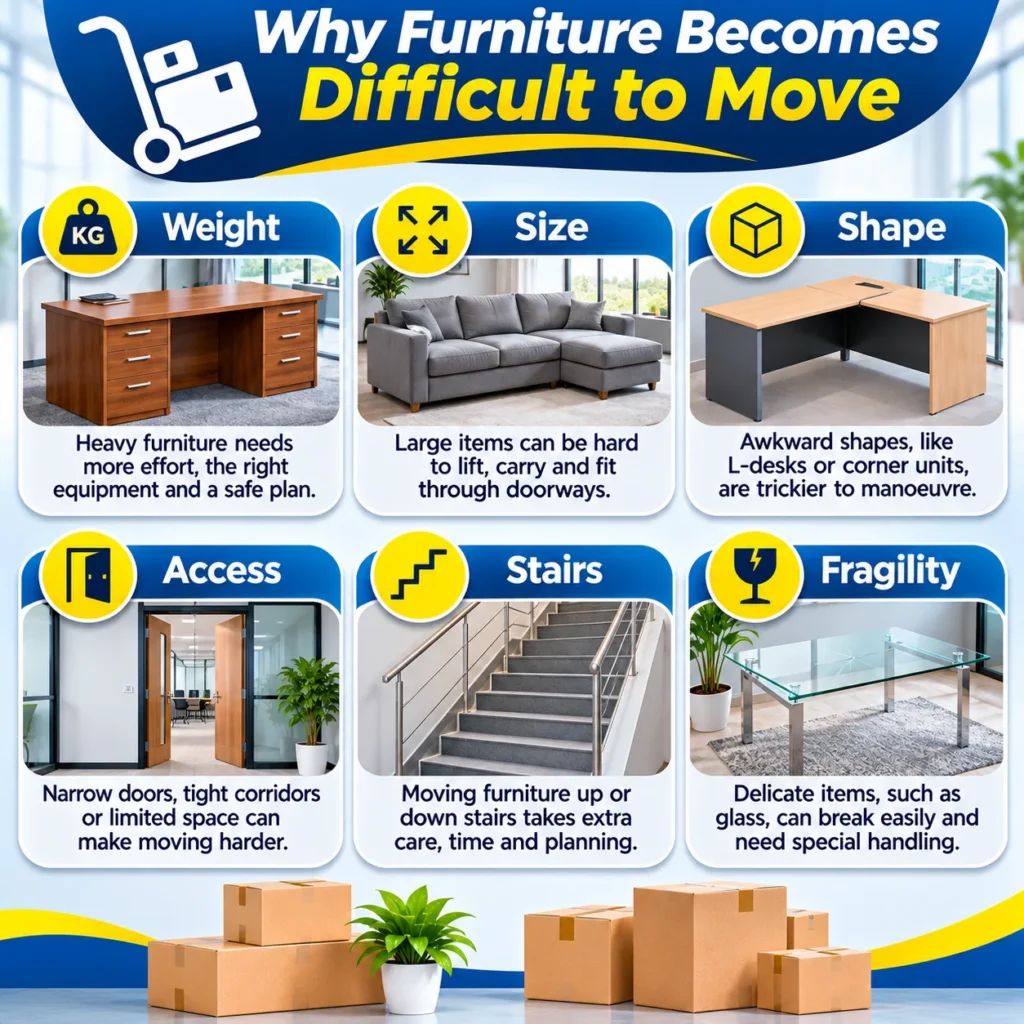
The heaviest item is not always the most difficult one to move. Shape, flexibility, weight distribution, fragility and the route between the room and the vehicle can all make a difference.
A large sofa, for example, may not be extremely heavy but can become almost impossible to manoeuvre around a tight staircase. A tall wardrobe may be manageable in an open room but difficult to remove through a narrow landing.
The Health and Safety Executive recommends assessing risks associated with lifting, carrying and team handling rather than simply relying on physical strength. Its Manual Handling Assessment Chart considers factors such as the load, task and working environment.
The Furniture That Causes the Biggest Problems
Sofas and Large Corner Suites
Sofas are among the most common problem items because their length and awkward shape make turning difficult. Corner sofas can be particularly challenging when they cannot be separated into smaller sections.
Before moving one, measure the sofa, doorways, hallway width, stairway and any tight turns. Also check whether doors can open fully and whether removable cushions or legs can be taken off.
Large Wardrobes
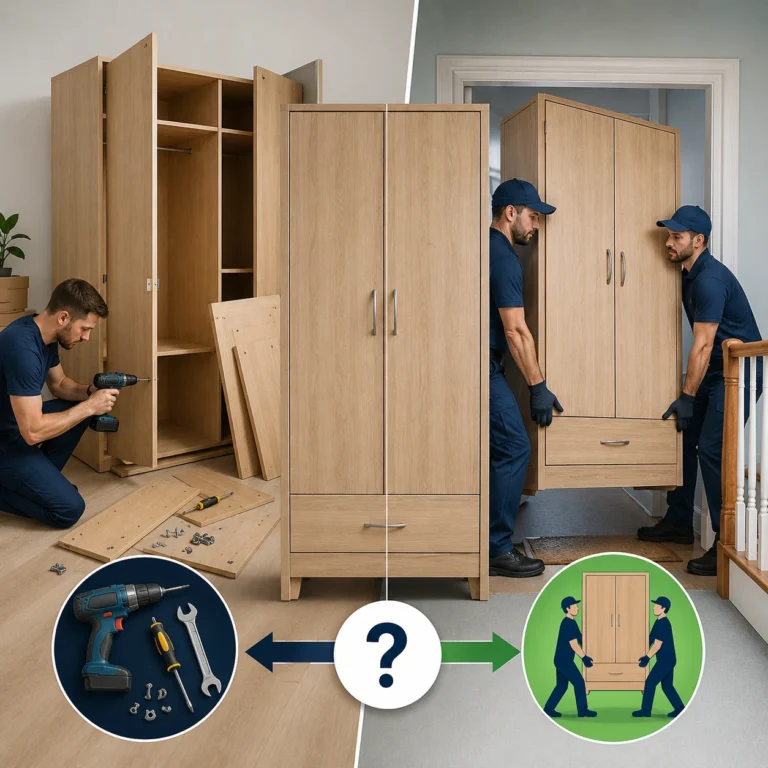
Tall wardrobes create two problems: their size and their weight distribution. Freestanding wardrobes may need partial dismantling before they can safely pass through narrow doorways.
Built-in wardrobes require extra care because removing them may involve fixings, surrounding trim or panels. Merton Council specifically excludes kitchen units and built-in wardrobes from its bulky waste collection service, so they should not simply be treated like ordinary unwanted furniture.
Beds and Bed Frames
Bed frames can look straightforward until they reach a narrow staircase. Headboards, storage beds and solid wooden frames may be surprisingly heavy and awkward to carry.
Where possible, dismantle the frame according to the manufacturer’s instructions and keep screws, brackets and fittings together in a labelled bag.
Glass Cabinets and Display Units
Fragile furniture presents a different risk. Glass doors, mirrors and shelves can crack or shatter if they are not protected properly.
Remove loose glass components where practical, wrap them securely and make sure they cannot move inside the vehicle. Never assume that a blanket alone will protect delicate glass from pressure or impact.
Heavy Dining Tables
Large dining tables become difficult when they are wide, solid and impossible to carry comfortably through a doorway. Extending mechanisms can also be damaged if the table is lifted incorrectly.
Check whether the legs can be removed and protect the corners before carrying the table through narrow areas.
Furniture | Common problem | Useful preparation |
Sofa | Tight turns and staircases | Remove cushions and detachable sections |
Wardrobe | Height and weight | Dismantle where suitable |
Bed | Bulky frame | Separate frame and fittings |
Glass cabinet | Fragility | Remove and protect glass |
Dining table | Width and weight | Remove legs where possible |
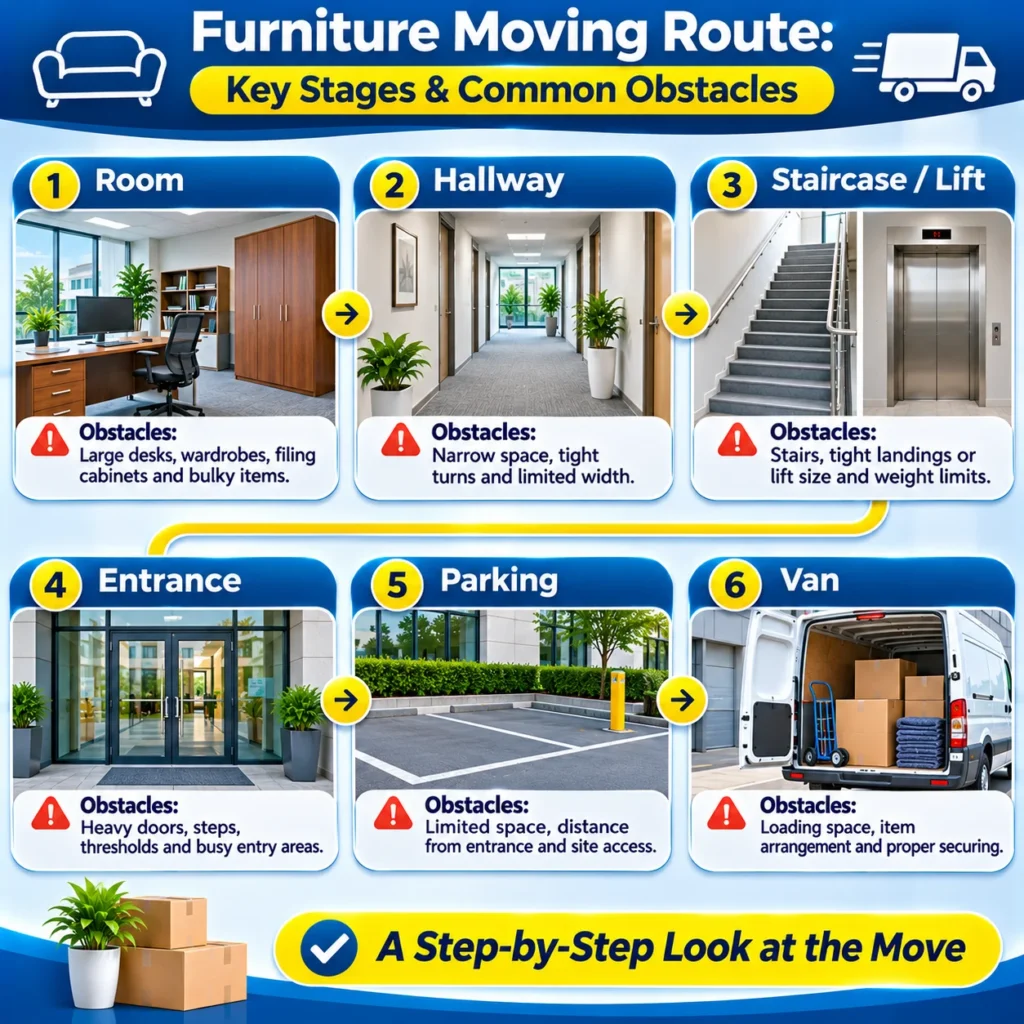
Why Access Matters as Much as Furniture Size
Consider a three-seater sofa leaving a first-floor flat. The sofa may fit through the front door but fail at the stairwell because of a sharp turn. Similarly, a wardrobe might fit through a hallway but become impossible to rotate at the bottom of the stairs.
Lift availability is another important consideration in apartment moves. Even when a lift is available, its internal dimensions and weight limit need checking before assuming that large furniture can use it.
Parking and vehicle access matter too. A longer carrying distance means more handling and more opportunity for damage, particularly when weather conditions are poor.
How to Prepare Difficult Furniture for Moving
Start by measuring the furniture and the route rather than guessing. Photograph complicated pieces before dismantling them so you have a visual reference when rebuilding them.
Remove shelves, cushions, drawers and other loose components where appropriate. Protect corners and vulnerable surfaces with suitable moving materials, and keep small fittings labelled and together.
Do not try to force furniture through a space. Scraped walls, damaged flooring and broken furniture can cost considerably more than taking extra time to plan the route.
For particularly awkward pieces, professional movers can use suitable handling equipment and coordinated team lifting. HSE guidance emphasises reducing hazardous manual handling where reasonably practicable and assessing unavoidable risks.
What Can Increase Removal Costs?
The cost of small office removals Lambeth depends on factors such as volume, distance, crew size, access, timing, packing requirements and whether furniture needs dismantling or reassembly. Comparing prices without comparing inclusions can be misleading.
Ask whether the quote covers loading, unloading, protection, stairs, waiting time, dismantling, packing and access-related charges. Confirm insurance arrangements and what happens if an item is damaged.
A cheaper move can become expensive if staff lose a working day, equipment is damaged or access delays the vehicle.
When Professional Furniture Moving Makes Sense
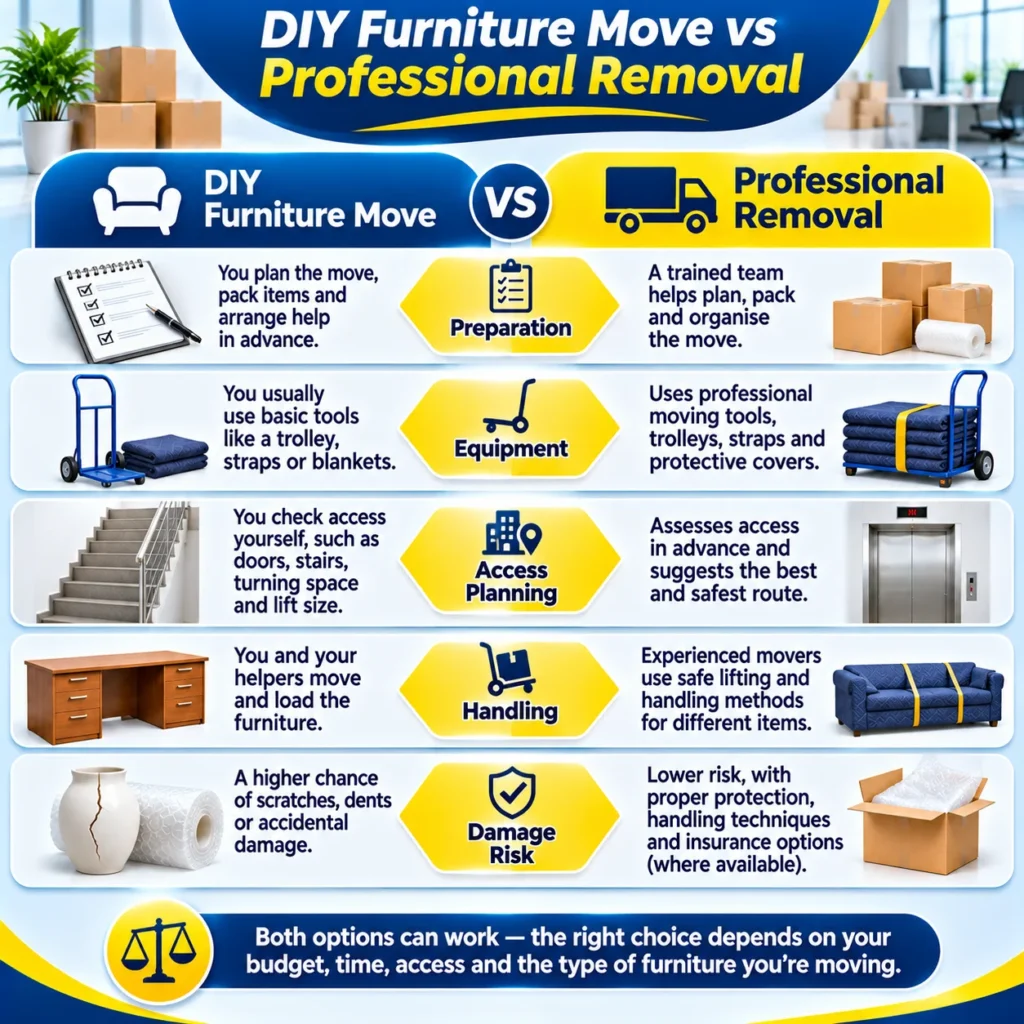
DIY moving may work for small, lightweight pieces when access is straightforward. Larger or awkward furniture is different because poor lifting technique or rushed handling can create avoidable injury and property-damage risks.
A professional team should consider the furniture, people involved, route, vehicle and destination together. This is particularly useful for flats, period properties, homes with narrow staircases and moves involving several large items.
For customers looking for a furniture moving company in London residents can use for local moves, Sameday Removals Ltd currently provides Merton house-removal services and asks customers to provide details such as floors, lifts and bulky items when requesting a quote.
What About Unwanted Furniture?
Moving house often reveals furniture that is no longer wanted. Before leaving an old sofa, wardrobe or bed behind, check the available disposal options.
Merton Council currently allows every household to book one free bulky-waste collection each year for up to three items. The service covers items such as sofas, beds, armchairs and freestanding wardrobes, subject to its collection rules.
Residents can also use Merton’s pop-up tips for bulky household items such as furniture, while reusable pieces may have donation or reuse options.
If a private business is taking unwanted furniture away as waste, the UK Government advises householders to check that the carrier is authorised. The Government’s waste duty-of-care guidance specifically includes old furniture among household waste and recommends checking the relevant waste carrier registration.
Key Takeaways
The furniture that causes the most trouble is usually not simply the heaviest item. Sofas, tall wardrobes, large beds, glass cabinets and wide dining tables become difficult when their dimensions interact badly with stairs, doors, lifts and parking access.
Measure before moving, dismantle suitable furniture, protect fragile surfaces and plan the complete route. If an item is particularly large, valuable or awkward, professional handling can reduce the pressure on moving day.
If you are planning home furniture removals Merton residents can arrange around difficult furniture and challenging access, Sameday Removals Ltd provides house-moving support in the area, with quotes based on the details of the individual move.
Which piece of furniture in your Merton home looks most difficult to move—and would you like help planning the safest way to get it out?
Looking for removal service in London?
0795-145-5002
Frequently Asked Questions
1. What furniture is hardest to move?
Large sofas, wardrobes, solid beds, glass cabinets and wide dining tables often create the biggest challenges. Their dimensions, weight distribution, fragility or awkward shapes can make stairs, doorways and tight corners difficult to navigate.
2. Should I dismantle furniture before moving house?
Dismantling can make some furniture safer and easier to handle, particularly wardrobes, bed frames and tables. However, only dismantle items where it is appropriate and keep all fittings labelled so they can be reassembled correctly.
3. How do I move a large sofa through a narrow doorway?
First measure both the sofa and the complete route through the property. Removing cushions, legs or detachable sections may help, but forcing a sofa through a restricted opening can damage both the furniture and the property.
4. Are wardrobes difficult to move?
Large wardrobes can be difficult because of their height, weight and rigidity. Freestanding models may be easier to move after suitable dismantling, while built-in wardrobes require more careful planning.
5. Can furniture damage walls during a house move?
Yes. Corners, stair rails, door frames and painted walls can be damaged when bulky furniture is turned or carried through restricted spaces. Measuring the route and protecting vulnerable areas can reduce this risk.
6. Is it safer to use two people to move heavy furniture?
Team handling can be appropriate for some furniture, but simply adding another person does not automatically make a lift safe. HSE recommends assessing lifting, carrying and team-handling risks and considering appropriate controls.
7. Can Merton Council collect unwanted furniture?
Yes. Merton Council currently offers one free bulky-waste collection per household each year for up to three items, subject to its rules and booking availability. Additional collections are chargeable.
8. Can I leave unwanted furniture outside for collection?
Furniture should only be placed out according to the collection instructions. Merton Council states that items should remain within the property’s boundary and be accessible to the collection crew rather than being left on a public pavement or road.
9. What should I check before booking furniture removals?
Check the furniture dimensions, floors, staircases, lifts, parking arrangements and whether any items require dismantling. Providing accurate information helps a removal company understand the equipment, vehicle and labour likely to be required.
10. What should I check if a private company removes unwanted furniture?
Check that the company is authorised to take household waste. The UK Government advises householders to verify the relevant waste carrier registration before handing household waste to a private business.