

Fixed-Price vs Hourly Removals: Which Saves You Money?
Moving home is exciting, but it can also be expensive if you choose the wrong pricing model. Understanding fixed price vs hourly removals before booking can help you avoid unexpected costs and keep your moving budget under control. Whether you’re relocating across the city or planning larger removals in London, knowing how each pricing method works makes it much easier to choose the right service.
The challenge is that there is no single answer for every move. A one-bedroom flat with easy parking has very different requirements from a four-bedroom family home with narrow staircases, heavy furniture, and long walking distances. That’s why understanding how removal companies calculate their prices is one of the smartest financial decisions you can make before moving day.
What Is a Fixed-Price Removal Service?
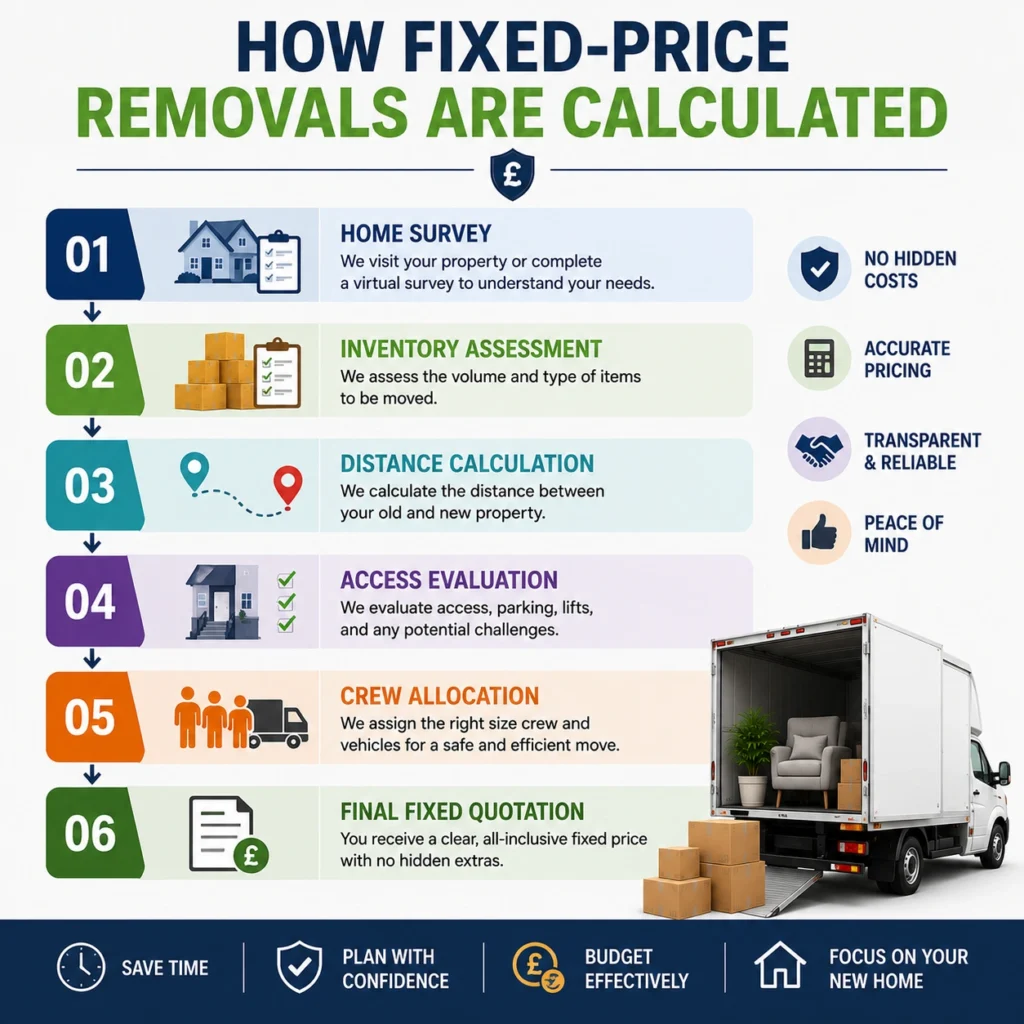
A fixed-price removal means you receive one agreed price before your moving day. Once both parties confirm the inventory and moving details, the price usually remains the same unless the scope of work changes.
Most professional removal companies calculate this quote after considering several factors, including:
- Property size
- Number of items
- Travel distance
- Access to both properties
- Number of movers required
- Vehicle size
- Additional services such as packing or dismantling furniture
Because the total cost is agreed in advance, many homeowners find fixed-price removals easier for budgeting.
Why Many Families Prefer Fixed Prices
One of the biggest advantages is certainty. You already know what you’ll pay before the move begins, making it easier to manage your finances.
According to the HomeOwners Alliance, moving home is one of the biggest household expenses after buying a property, making accurate budgeting particularly important for homeowners.
What Are Hourly Removals?
Hourly removals charge customers based on the amount of time spent completing the move. Instead of receiving one fixed amount, you pay for the crew and vehicle by the hour.
This pricing model is common for:
- Small house moves
- Student moves
- Single-item transport
- Last-minute moves
- Local relocations
If everything goes smoothly, hourly removals can sometimes cost less than a fixed-price service.
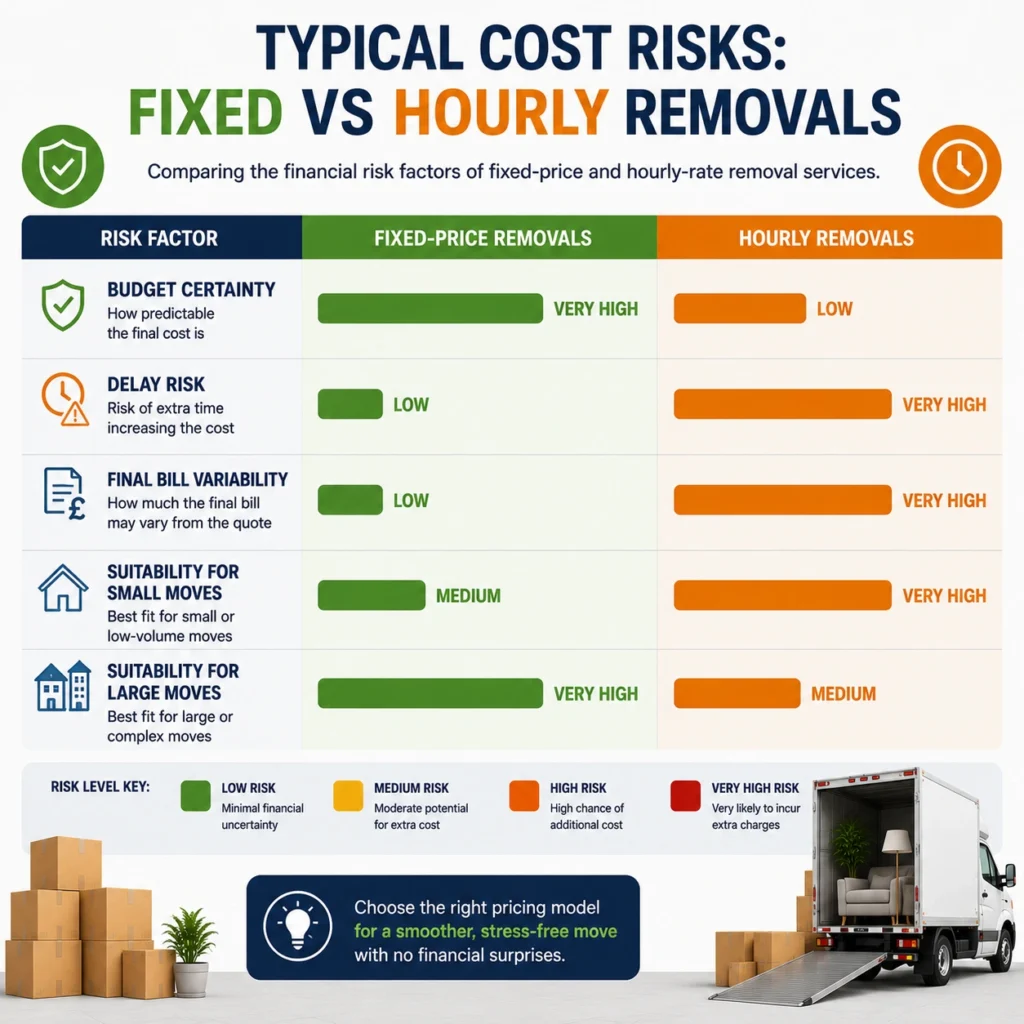
However, delays increase the total bill.
Common causes include:
- Traffic congestion
- Lift waiting times
- Poor parking access
- Delayed key collection
- Extra furniture not originally declared
Every additional hour increases the final invoice.
Which Pricing Model Usually Costs Less?
The answer depends on your move.
For a straightforward local move that takes only a few hours, hourly removals may offer better value.
For larger homes or complicated relocations, fixed-price removals often become more economical because unexpected delays do not usually affect your agreed quotation.
Imagine these two examples.
Example 1: Small Flat Move
A one-bedroom flat moving only three miles with excellent parking.
Expected moving time:
- Loading: 1.5 hours
- Travel: 20 minutes
- Unloading: 1.5 hours
Total working time:
Around 3.5 hours.
An hourly service may be cheaper in this situation.
Example 2: Family Home
A four-bedroom house moving across London.
Potential delays include:
- School traffic
- Congested roads
- Long walking distances
- Furniture dismantling
- Lift restrictions
A fixed-price quotation protects you from paying more if these issues extend the moving time.

Factors That Affect Both Pricing Models
Whether you choose fixed or hourly pricing, removal companies consider many of the same factors.
Distance
Long-distance moves require more fuel, more driver hours and additional planning.
Short local moves often benefit from hourly pricing because travel time remains limited.
Property Access
Access can have a surprisingly large impact on costs.
Examples include:
- Third-floor flats without lifts
- Long driveways
- Narrow hallways
- Restricted parking
- Apartment loading bays
Poor access increases labour time regardless of pricing method.
Furniture Size
Large wardrobes, American-style fridge freezers and solid wood furniture require additional manpower.
Professional movers may also need specialist lifting equipment for particularly heavy items.
Packing Requirements
Customers who pack everything before moving day often complete their move faster.
Professional packing services increase the quotation but can significantly reduce the risk of damaged belongings during transport.
Moving Cost Estimator
Calculate your removal costs, crew size, and job duration with our instant estimator.
When Should You Choose Fixed-Price Removals?
Fixed pricing works particularly well when your move involves many variables. Families relocating larger homes often appreciate knowing the total cost before moving day, especially when managing multiple expenses such as legal fees, deposits, and utility connections.
It is also a smart option if your move takes place during busy periods. Industry reports from the UK housing market consistently show that moving activity increases during the summer months, weekends, and month-end dates. Higher demand can create scheduling pressure, making predictable pricing even more valuable for customers planning ahead.
When Are Hourly Removals the Better Choice?
Although fixed pricing offers greater certainty, hourly removals can save money in the right circumstances. If you’re moving from a small flat, transporting only a few items, or relocating within the same neighbourhood, paying by the hour may result in a lower overall bill.
For many local removals London, companies charge an hourly rate because travel time is relatively short. According to the HomeOwners Alliance, local removal jobs are commonly priced by the hour, while longer-distance moves are more likely to receive a fixed quotation. The same guide notes that delays, such as waiting for property access, may result in additional hourly charges if these are not included in your agreement.
However, hourly pricing works best when you have:
- Packed everything before the movers arrive
- Good parking at both properties
- Easy property access
- Minimal dismantling of furniture
- A short travelling distance
The better prepared you are, the more likely you’ll finish within the estimated timeframe.

Hidden Costs That Can Increase Your Moving Bill
Many people compare only the advertised price and overlook additional charges that may appear later. Understanding these costs helps you compare quotes fairly, whether you choose fixed or hourly pricing.
Waiting Time
Property chains can be unpredictable. If keys are delayed, hourly movers may continue charging while waiting outside your new home.
Packing Materials
Boxes, wardrobe cartons, protective blankets and wrapping materials may not always be included within the original quotation.
Difficult Access
Long walking distances between the van and your property can increase loading and unloading times. In busy areas of London, parking restrictions can add significant labour time.
Extra Items
Adding furniture after accepting a fixed quotation may require the removal company to adjust the price because larger vehicles or additional crew members may become necessary.
Before booking, always ask for a written quotation that clearly explains what is and isn’t included.
Practical Ways to Reduce Your Moving Costs
Whichever pricing model you choose, there are several proven ways to keep your moving costs under control.
Decluttering before moving day is one of the easiest ways to save money. Fewer belongings require less loading time and may even reduce the size of vehicle needed.
Booking early also helps. Removal companies often have greater availability several weeks in advance, allowing you to choose dates with more competitive pricing.
If possible, consider moving during weekdays instead of weekends. Demand is usually higher on Fridays, Saturdays and at the end of each month, which can affect pricing.
Packing your belongings yourself is another effective cost-saving strategy if you have enough time. Just make sure fragile items are packed securely to minimise the risk of damage during transport.

How to Decide Between Fixed Price and Hourly Removals
If you’re still unsure which option offers better value, ask yourself a few simple questions.
Is your move straightforward with only a few items?
Do you know exactly how long the move should take?
Will both properties have easy parking and access?
If you answered “yes” to these questions, hourly removals may be a cost-effective choice.
On the other hand, if your move involves multiple bedrooms, valuable furniture, long-distance travel or uncertain access times, a fixed-price quotation usually provides greater financial protection.
Rather than focusing only on the lowest advertised price, compare the overall value. An accurate quotation, experienced movers and transparent pricing often save far more than choosing the cheapest option available.
Why Professional Planning Makes a Difference
A successful move depends on more than the pricing model. Good preparation reduces stress, prevents delays and helps the removal team work efficiently.
Professional removal companies usually recommend preparing an accurate inventory before requesting a quote. This allows them to allocate the right vehicle, crew size and equipment from the beginning.
The HomeOwners Alliance also recommends comparing several written quotations rather than accepting the first estimate. Shopping around gives homeowners a better understanding of market pricing and helps identify companies that offer transparent terms and conditions.
For anyone planning removals in London, asking detailed questions before booking can prevent misunderstandings later. Clarify whether insurance, packing materials, waiting time and furniture dismantling are included in the quoted price.
Ready to Choose the Right Pricing Model?
Every move is different, and the cheapest option isn’t always the one that offers the best value. By comparing the size of your move, the distance, your preparation level and the likelihood of delays, you can confidently decide whether fixed-price or hourly removals are the smarter financial choice.
Which pricing model would you choose for your next move, and what matters most to you—saving money, having a guaranteed price, or enjoying greater flexibility? Share your thoughts below.
Frequently Asked Questions (FAQs)
1. What is the difference between fixed-price and hourly removals?
Fixed-price removals provide a set quotation before your move begins, based on factors like the size of your property, the number of items, travel distance, and access. Hourly removals charge for the time spent completing your move. Fixed pricing offers greater cost certainty, while hourly pricing may be more affordable for small, local moves.
2. Which is cheaper: fixed-price or hourly removals?
There isn’t a one-size-fits-all answer. Hourly removals are often cheaper for small moves that take only a few hours. Fixed-price removals can save money on larger or more complex moves by protecting you from unexpected delays and additional hourly charges.
3. Are hourly removal costs affected by traffic delays?
Yes. If your removal company charges by the hour, delays caused by traffic, parking issues, waiting for property access, or slow loading times can increase your final bill. That’s why hourly pricing works best for straightforward local moves with minimal delays.
4. When should I choose a fixed-price removal service?
A fixed-price removal is ideal if you’re moving a larger home, relocating over a longer distance, or want to know the total cost before moving day. It also provides peace of mind if there is a higher risk of delays due to difficult access or busy city traffic.
5. Do removal companies include packing services in their quotes?
Not always. Some removal companies include packing materials and professional packing services, while others charge separately. Always ask for a detailed written quotation that clearly explains what is included to avoid unexpected costs.
6. How do removal companies calculate a fixed-price quote?
Removal companies typically assess your property size, inventory, travel distance, vehicle requirements, access at both locations, number of movers needed, and any additional services such as packing, furniture dismantling, or specialist item handling before providing a fixed quotation.
7. Can a fixed-price removal quote change after booking?
A fixed-price quote usually stays the same unless the details of your move change. Adding extra furniture, changing the moving date, increasing the travel distance, or requesting additional services may result in a revised quotation.
8. How can I reduce the cost of my house move?
You can save money by decluttering before moving, packing your belongings yourself, booking your removal company early, choosing a weekday move where possible, and providing an accurate inventory to avoid unexpected charges.
9. Are fixed-price removals better for long-distance moves?
Yes. Fixed-price removals are generally recommended for long-distance moves because they protect you from extra costs caused by traffic, road delays, or longer-than-expected loading and unloading times.
10. How do I choose the best removal company in London?
Look for a removal company with transparent pricing, positive customer reviews, appropriate insurance, experienced movers, and written quotations with no hidden charges. Comparing multiple quotes helps you find the best value rather than simply the lowest price.